Last Updated: November 13, 2026
Quick Summary
Vinegar contains acetic acid, which reacts with the calcium carbonate in marble and dissolves a thin layer of the polished surface. That leaves a dull, rough patch, so vinegar etches marble on contact, even when diluted. Etching is permanent without polishing and cannot be removed with soap and water.
- Marble is mostly calcium carbonate, which acid breaks down on contact.
- Any acidic substance, including lemon juice, wine and tomato sauce, can etch marble.
- Test for etching by drag-testing a fingernail and checking under raking light.
- Light etching can often be polished out with marble polishing powder and a soft pad.
- Sealers protect against staining but do not stop acid from etching marble.
Table of Contents
- What Marble Etching Looks Like and Why It Matters
- The Chemical Reaction: Acetic Acid Versus Calcium Carbonate
- Etching Versus Staining: How to Tell Them Apart
- Common Household Acids to Keep Off Marble
- How to Remove Etching from Marble Yourself
- Preventing Etching and Whether Sealers Help Against Acid
- When to Hire Professional Marble Restoration Services
- Booking a Free Estimate for Your Marble Surface
- Frequently Asked Questions
What Marble Etching Looks Like and Why It Matters
Why does vinegar etch marble countertops? Vinegar contains acetic acid, which reacts with the calcium carbonate in marble and dissolves a thin layer of the surface. Homeowners who reach for a bottle of vinegar to clean a counter can end up with a dull, rough patch, because vinegar etches marble on contact.
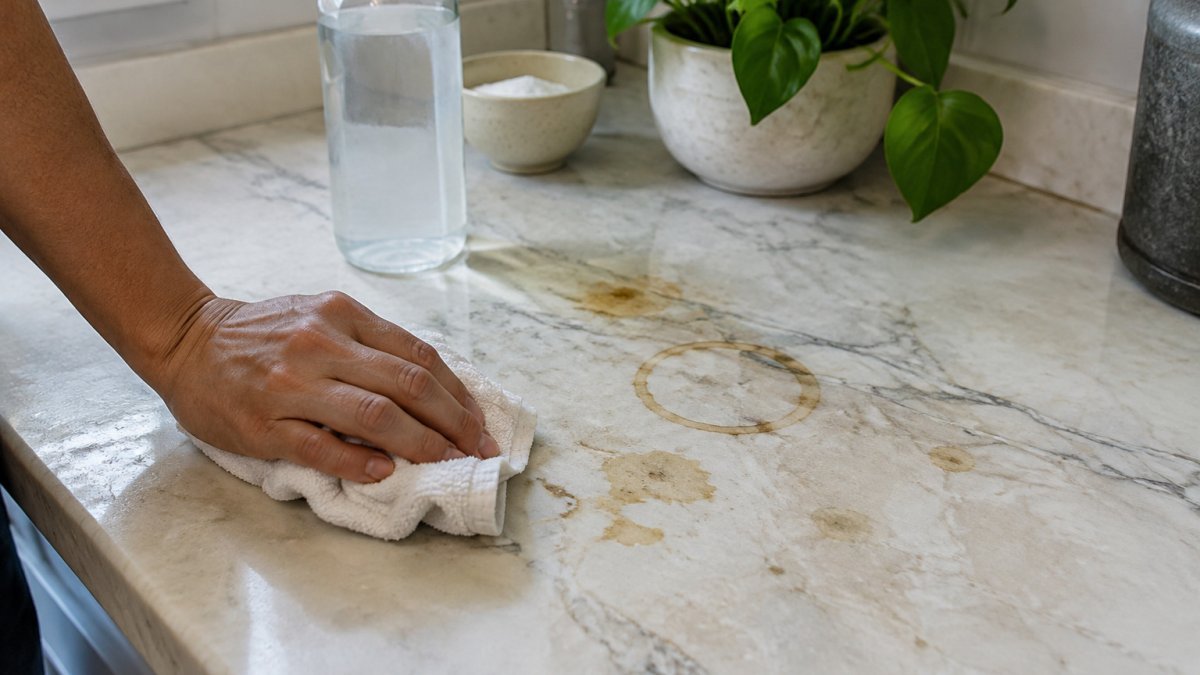
Etching looks like a dull, cloudy spot or a faint outline where the polish has worn away. The area may feel slightly rough to the touch. In strong light, you may see a matte ring or a shadow where the surface is no longer glossy.
Etching matters because it is permanent without restoration. Marble is a soft natural stone, and the polished finish is a thin layer that protects the stone underneath. Once that layer is gone, the spot will not clean up with soap and water. It needs to be polished back to its original shine.
The Chemical Reaction: Acetic Acid Versus Calcium Carbonate
Marble is made mostly of calcite, which is calcium carbonate (What about buildings? (USGS)). Acetic acid, the main ingredient in vinegar, reacts with calcium carbonate in an acid-base reaction. The acid breaks down the stone, releasing carbon dioxide gas and dissolving calcium into water.
This reaction happens even with diluted vinegar. Many homeowners assume a weak cleaner is safe, but any acidic substance can etch marble. The stronger the acid and the longer it sits, the deeper the damage.
Other acids in the kitchen cause the same problem. Lemon juice, tomato sauce, wine, and some cleaning products all contain acids that can dull the surface, and like vinegar, they can etch marble. Think of marble as a surface that reacts badly to anything with a low pH.
Etching Versus Staining: How to Tell Them Apart
Etching and staining look similar in a photo, but they are different problems with different fixes, and misdiagnosing one as the other is the most common reason a homeowner makes the damage worse. Etching is surface damage where acid has dissolved the calcium carbonate and the polish along with it. Staining happens when a liquid soaks into the stone’s pores and leaves color behind.
The fastest way to tell them apart is the fingernail and light test. Drag a fingernail lightly across the spot. An etch mark catches the nail slightly because the surface is rougher than the surrounding polish; a stain feels the same as the rest of the counter. Then tilt a flashlight so it rakes across the surface at a low angle.
Here is how the three most common marks differ:
- Etch mark: Dull, matte, or slightly rough spot with no color change. It does not wipe off, does not darken when wet, and shows up most clearly under raking light. Caused by acid, including vinegar, lemon juice, wine, tomato sauce, and acidic cleaners.
- Stain: Dark or colored mark that sinks into the stone and may look darker when the surface is wet. The polish over it is usually intact and still shiny. Caused by oil, coffee, tea, rust, or pigment that soaks into pores.
- Water ring or water spot: A cloudy film or ring left by hard water minerals or a wet glass. It often wipes off with a dry cloth or a pH-neutral stone cleaner, and it does not change the texture of the stone.
A useful field test: wipe the spot with a damp cloth and let it dry. An etch mark stays exactly as dull as before and may look slightly worse because the water highlights the texture difference. A stain may lighten or spread at the edges as moisture moves the pigment. A water ring usually disappears entirely.
Watch out: do not scrub an etch mark with an abrasive pad or a generic bathroom cleaner to “see if it comes off.” If the spot is an etch, the abrasive dulls more of the surrounding polish and the acidic cleaner deepens the damage, turning a small repair into a larger one.
If the diagnosis is still unclear, a stone restoration professional can help confirm whether the problem is surface damage or subsurface color. Getting the diagnosis right the first time saves money and prevents a treatment that does not fit the problem.
The table below compares the three most common marks so you can tell which problem you are dealing with.
| Mark | Appearance | Cause |
|---|---|---|
| Etch mark | Dull, matte, or slightly rough; no color change | Acid, including vinegar, lemon juice, wine, tomato sauce |
| Stain | Dark or colored; polish usually intact and shiny | Oil, coffee, tea, rust, or pigment soaking into pores |
| Water ring | Cloudy film or ring; wipes off | Hard water minerals or wet glass |
Common Household Acids to Keep Off Marble
Several everyday items can etch marble. The most common culprits are:
- Vinegar and vinegar-based cleaners
- Lemon and lime juice
- Tomato sauce and salsa
- Wine, especially red wine with acidic notes
- Orange juice and other fruit juices
- Coffee and soda
- Bathroom and tile cleaners with acid
- Some grout and rust removers
Keep these items off marble countertops, and wipe up spills right away. Use a pH-neutral cleaner made for natural stone. Store cleaning products away from the counter so you do not grab the wrong bottle by mistake.
How to Remove Etching from Marble Yourself
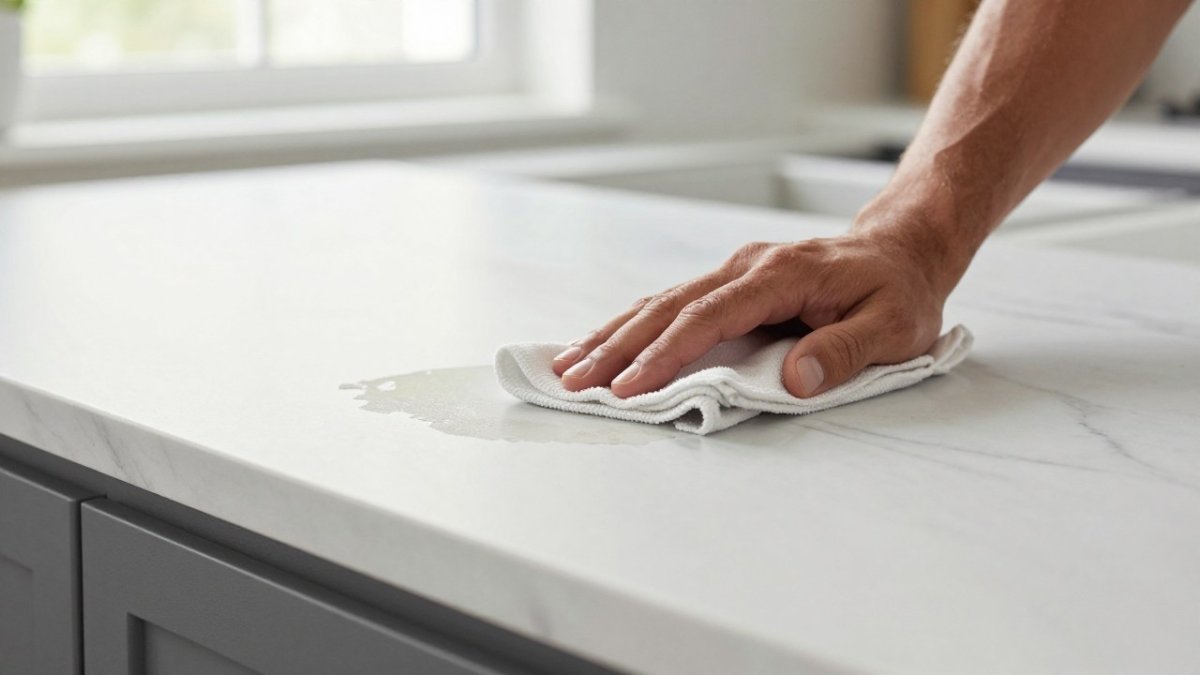
Light etching can often be polished out at home. Start with a clean, dry surface and a marble polishing powder, which is a fine abrasive made for natural stone. Honing powder is a coarser product that restores a matte or honed finish, while polishing powder brings back shine.
- Clean the area with a pH-neutral stone cleaner and dry it fully.
- Dampen the etched spot with a little water.
- Sprinkle a small amount of polishing powder on the spot.
- Rub in small circles with a soft white pad, using light pressure.
- Wipe clean and check the area in good light.
- Repeat if needed, then seal the surface.
Work slowly and check often. Too much pressure or too much time with the abrasive can create a dull patch larger than the original etch. If the spot does not improve after a few tries, stop and call a professional.
Choosing a Marble Etch Remover
Look for a product labeled for marble or natural stone. Avoid harsh chemicals and abrasive scrubbers, which can scratch the surface. Test any remover on a small hidden area first, such as the underside of the counter or a corner that will not be seen.
Preventing Etching and Whether Sealers Help Against Acid
The most persistent misconception about marble is that sealing makes it acid-proof. It does not. A standard penetrating sealer soaks into the pores and lines them with a water-repellent barrier, which slows liquids that would otherwise soak in and stain. It does nothing to stop acid from reacting with the calcium carbonate at the surface, because the acid attacks the stone itself, not the sealer.
That distinction matters because homeowners often seal a counter, feel protected, and then leave acidic cleaners on the surface longer than they would otherwise. Sealers buy time against staining, not against etching.
Finish changes how visible an etch mark is and how easily it can be repaired. Polished marble has a thin, highly reflective layer that makes every dull spot stand out, so a single etch mark is obvious and usually requires polishing powder to blend. Honed marble has a matte finish that hides light etching far better, and a honed surface can often be refreshed with a honing powder rather than a full repolish.
For actual acid resistance, the product category to look for is an anti-etch coating, sometimes sold as a stone surface protectant. These products form a thin sacrificial barrier on top of the stone that the acid attacks first, slowing the reaction and giving you time to wipe a spill. You can compare Anti-Etch Certified Stone Protection for marble countertops and see how professional application works.
Prevention still comes down to habits that no product replaces:
- Use a cutting board and a tray under oil, vinegar, citrus, and wine bottles.
- Wipe acidic spills immediately with a damp cloth, then dry the surface.
- Clean with a pH-neutral stone cleaner rather than vinegar, lemon, or generic bathroom sprays.
- Keep acidic cleaners, rust removers, and grout products off the counter entirely.
- Reseal on the schedule the sealer manufacturer recommends, and reapply anti-etch coatings as directed.
Watch out: a common pattern is to apply a sealer over an etch mark that was never repaired. The sealer locks in the dull spot and makes it harder to polish out later, so restore the surface first and seal after.
A protective product and consistent habits work best together. If you are unsure whether your counter is sealed or what finish it has, a stone professional can test it and recommend the right combination of sealer and anti-etch protection.
When to Hire Professional Marble Restoration Services
Consider calling a professional when the etch is deep, covers a large area, or has not responded to home methods. Deep etching can go past the polished layer, and aggressive polishing can make the damage worse.
Professional marble refinishing is also the better choice for a whole countertop or a high-use surface. Johnny Stone Work provides marble polishing and restoration for residential and commercial stone surfaces, with services that include polishing, cleaning, sealing and repair. You can learn more about marble refinishing for countertops and what that service covers.
Hiring a pro is often the safer option.
Booking a Free Estimate for Your Marble Surface
If you have an etched marble countertop, the first step is an honest look at the damage. Johnny Stone Work provides free estimates, so you can learn what the restoration will involve before you commit.
Contact Johnny Stone Work today for a free estimate on your marble. Johnny Stone Work has 163 happy customers, and we can give you a clear plan for bringing back your surface’s shine. Call a marble contractor today for a free estimate!
Frequently Asked Questions
How do you reverse etching on marble?
Light etching can often be reduced by polishing. Use a marble-specific polishing powder or a fine-grit diamond pad, working in small circles with a little water until the dull spot blends with the surrounding surface. Light buffing with a marble etch remover can help on minor marks. Deeper etches that have worn into the stone usually need honing, starting with a coarser grit and moving to finer ones, followed by polishing and resealing. If the mark is deep or the surface is large, a professional stone restorer can assess the damage and recommend the right process.
Does vinegar damage marble countertops?
Yes. Vinegar is acetic acid, and it reacts with the calcium carbonate in marble, dissolving a thin layer of the surface. The result is a dull, rough spot called an etch mark. The damage is cosmetic and usually removable with polishing, but repeated exposure wears the finish down over time. Stone cleaners labeled pH-neutral are the safer choice for everyday cleaning, and a damp cloth with mild dish soap works for most spills.
Is Dawn dish soap okay to use on marble?
Mild dish soap such as Dawn is generally fine for routine cleaning of sealed marble, since it is close to neutral pH and does not etch the stone. Use a small amount in warm water, wipe with a soft cloth, and rinse thoroughly so no soap film is left behind. Avoid soaps with added acids, degreasers, or fragrance oils, and do not let soap sit on the surface. Frequent use of any cleaner can still wear down the sealer over time, so reapply sealer as recommended.
Can I fix a vinegar etch on my marble countertop myself?
Light etches on a polished marble countertop can often be fixed at home with a marble polishing powder or a marble etch remover, a soft pad, and water. Work in small sections, keep the surface wet, and check your progress often so you do not remove too much stone. If the etch is deep, covers a large area, or has left a rough texture, the job usually requires honing and repolishing, which is better handled by a professional stone restorer with the right equipment and experience.