Last Updated: November 3, 2026
Quick Summary
Marble floor restoration cost in NYC has no single per-square-foot rate, because the price is built from the condition of the stone, the finish you want, and the labor the job demands. Four factors drive most of the price: floor area, surface condition, marble type and finish, and access and protection. Small jobs can carry a fixed setup cost, so ask how a provider handles small jobs before comparing per-square-foot rates.
- Light dulling needs polishing only, while deep scratches, lippage, and etch damage require grinding and honing first.
- Soft, light marbles and a high-gloss polished finish take more passes than a matte honed finish.
- Elevators, loading rules, and furniture moving add labor before a single pad touches the floor.
- Repair work is frequently quoted by the piece rather than by the square foot.
- Replacement wins when stone is cracked through the slab or loose from the substrate.
Table of Contents
- Marble Restoration Cost Per Square Foot: What Moves the Number
- Marble Floor Repair Cost: What Counts as Repair Work
- Marble Floor Restoration vs. Replacement: Which Makes Sense
- Frequently Asked Questions
Marble Restoration Cost Per Square Foot: What Moves the Number
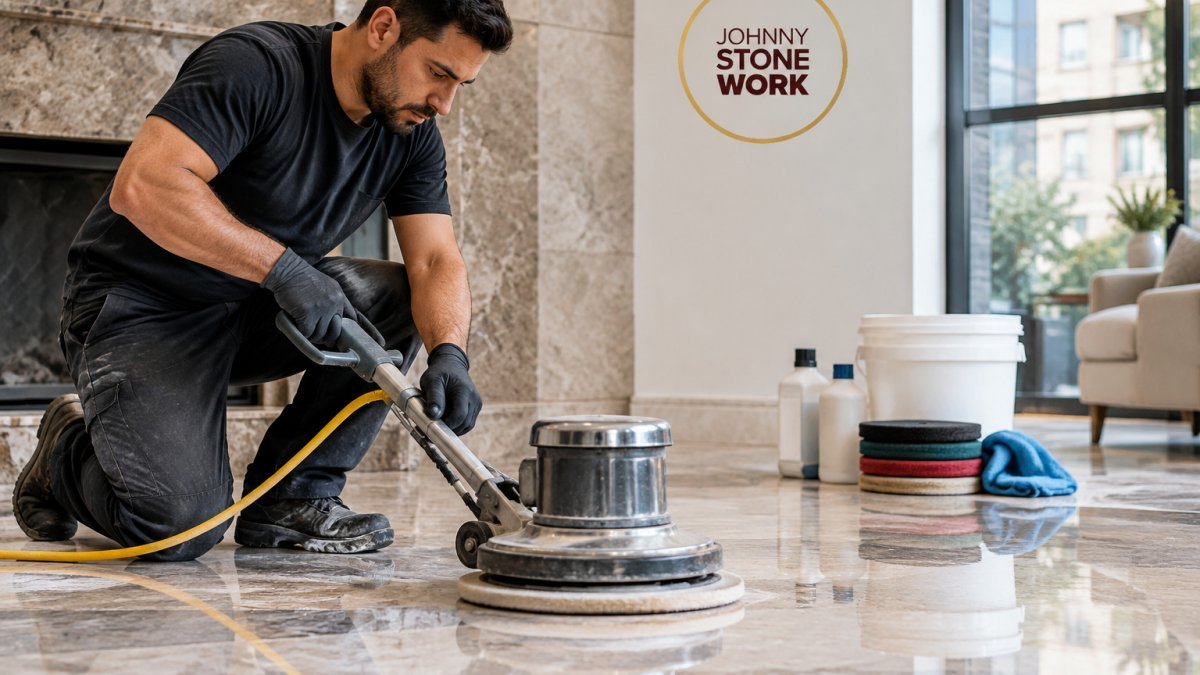
Marble floor restoration cost NYC homeowners ask about most often comes down to a simple truth: there is no single per-square-foot rate, because the price is built from the condition of the stone, the finish you want, and the labor the job demands. For the polishing side of that finish, see marble polishing in NYC and get a free quote. This guide from Johnny Stone Work breaks down what actually moves the number so you can read a quote with confidence.
Marble floor restoration is the process of grinding, honing, polishing, and sealing a stone surface to remove scratches, etch marks, stains, and dullness. It restores the floor rather than covering the damage.
Four factors drive most of the price:
- Floor area. Larger square footage generally spreads setup and travel across more work.
- Surface condition. Light dulling needs polishing only. Deep scratches, lippage, and etch damage require grinding and honing first.
- Marble type and finish. Soft, light marbles and a high-gloss polished finish take more passes than a matte honed finish.
- Access and protection. Elevators, loading rules, and furniture moving add labor before a single pad touches the floor.
Small jobs can carry a fixed setup cost, since mobilizing a crew and equipment does not shrink with the floor’s size. Ask any provider how it handles small jobs before comparing per-square-foot rates. You can also read a breakdown of marble polishing cost in NYC, Long Island, and CT.
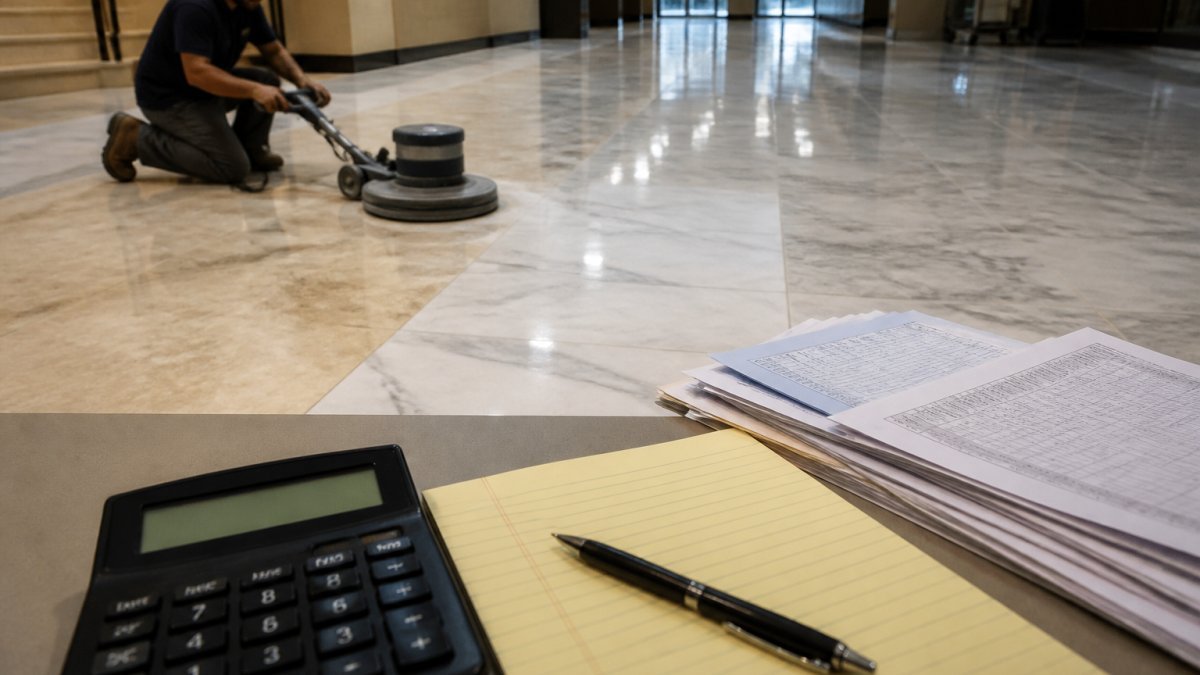
Four factors drive most of the price of marble floor restoration.
| Factor | What it covers | Note |
|---|---|---|
| Floor area | Larger square footage spreads setup and travel | Small jobs can carry a fixed setup cost |
| Surface condition | Light dulling needs polishing only | Deep scratches, lippage, etch damage need grinding and honing |
| Marble type and finish | Soft, light marbles and high-gloss polished finish | Take more passes than a matte honed finish |
| Access and protection | Elevators, loading rules, furniture moving | Add labor before a single pad touches the floor |
Marble Floor Repair Cost: What Counts as Repair Work
Repair pricing is often separate from restoration pricing, and mixing the two can make quotes confusing. Repair covers localized damage: crack repair, chip repair, stain and etch removal, grout repair, and lippage removal where one tile sits higher than its neighbor. For this kind of work, see marble repair specialists and request a free quote.
Repair work is frequently quoted by the piece rather than by the square foot, and a repair quote typically does not include polishing the whole floor.
Call a marble contractor today for a free estimate! →
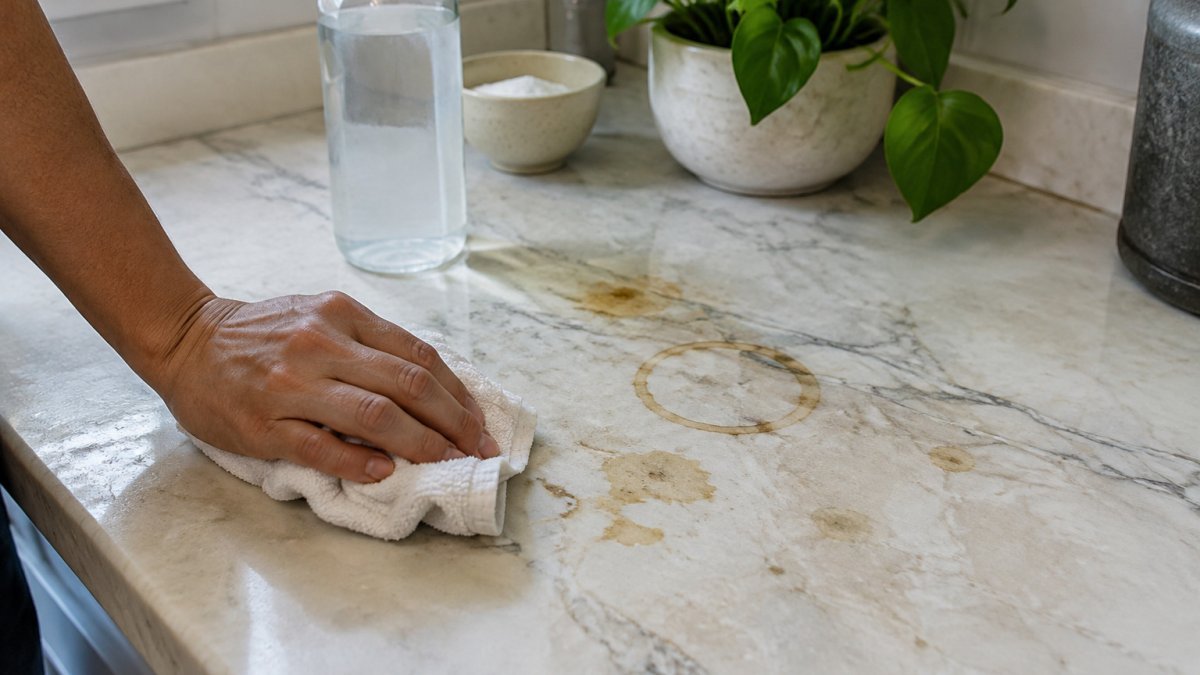
Watch out: a stain that has sat for months may have penetrated below the surface, and no amount of topical cleaning removes it. Honing or grinding may be needed to reach clean stone, which shifts the job from repair into restoration.
For damage confined to counters, tables, or a few tiles, contact Johnny Stone Work for a quote.
Marble Floor Restoration vs. Replacement: Which Makes Sense
Replacement means demolition, fabrication, and installation, plus the disruption of a torn-up floor. Restoration keeps the original stone and generally avoids the disruption of replacement. For solid marble in reasonable structural condition, restoration is usually the better call. You can review the marble and stone restoration service for floors and countertops.
Replacement wins in two cases: stone that is cracked through the slab or loose from the substrate, and a floor where the desired look cannot be reached by refinishing. Those are the exceptions, not the rule.
If you are weighing the two, contact Johnny Stone Work for a free estimate once restoration looks like the right path. You can request an estimate online.
Frequently Asked Questions
How much does it cost to restore marble floors?
Marble floor restoration is priced per square foot, and the final number depends on the floor area, the marble type, the finish you want, and how much damage has to be corrected. Heavy etching, stains, cracks, and lippage each add scope and time. Because every job differs, a written estimate after a condition assessment is the only reliable figure. Johnny Stone Work provides free estimates, so you can see the scope itemized before you commit.
Is it cheaper to restore marble floors or replace them?
Restoration generally avoids the demolition, fabrication, and installation that replacement requires, and you keep the original stone. Replacement also means matching new slabs to existing marble, which is difficult and often costly. Restoration makes sense when the stone is structurally sound and the damage is at the surface. If tiles are loose, deeply cracked, or missing, replacement may be the better call. A condition assessment settles the question.
How long does marble floor restoration take?
Timeline depends on square footage, the condition of the surface, and the finish you choose. Timelines depend on square footage, surface condition, and finish, so request a written schedule that names each stage. Sealer cure time adds to the schedule. Ask your contractor for a written timeline that names each stage so you can plan access to the space.
The hardest part is not deciding between restoration and replacement. It is finding a crew that diagnoses the stone honestly before quoting. Johnny Stone Work specializes in marble, slate, and granite restoration, including polishing, cleaning, sealing, and repair for residential and commercial clients, with free estimates. Get started with Johnny Stone Work and restore the shine your marble was made to hold.