Last Updated: November 22, 2026
Quick Summary
Most granite sealer lasts one to five years, depending on the stone and the product. A busy kitchen island wears faster than a low-use vanity, so test before resealing rather than following a calendar. Granite sealer soaks into pores to resist water and oil stains rather than forming a coating.
- Seal granite countertops every one to three years in a busy kitchen and every three to five years on low-use surfaces.
- The water-drop test tells you whether granite needs resealing in about 15 minutes with no special tools.
- Place three small water drops in different spots and wait 15 to 30 minutes before checking.
- Beading means protection is intact, while spreading or a dark wet ring means the sealer has failed.
- Over-sealing traps moisture and leaves a cloudy film, so skip it if a water drop still beads.
Table of Contents
- How Long Does Granite Sealer Last?
- How Often to Seal Granite Countertops
- How to Test Granite for Sealer
- Frequently Asked Questions
How Long Does Granite Sealer Last?
Most granite sealer lasts one to five years, depending on the stone and product; it is a penetrating sealer that soaks into pores and slows absorption, not a coating. A busy kitchen island wears faster than a guest bathroom vanity, and no label can promise a fixed number of years.
Granite sealer is a liquid applied to natural stone that fills surface pores to resist water and oil stains.
How Often to Seal Granite Countertops
Seal granite countertops every one to three years in a busy kitchen and every three to five years on low-use surfaces, testing before resealing rather than following a calendar. Porosity, color, sealer quality, use, and cleaning products all affect wear; harsh cleaners strip it. Over-sealing traps moisture and leaves a cloudy film, so if a water drop still beads, skip it.
If you would rather not reapply yourself, our team offers marble sealing in NYC for granite, marble, and slate, and you can request a free estimate before booking. For DIY, this guide on the best product for sealing marble countertops walks through product choice.
| Situation | Test First | Typical Reseal Interval |
|---|---|---|
| Busy family kitchen | Yes, every 6 months | 1-2 years |
| Light-colored granite | Yes, every 6 months | 1-2 years |
| Dark granite, low use | Yes, yearly | 3-5 years |
Typical Reseal Interval
How to Test Granite for Sealer
The water-drop test tells you whether granite needs resealing in about 15 minutes, with no special tools: clean with a stone-safe cleaner and let dry fully, place three small water drops in different spots, and wait 15 to 30 minutes. Beading means protection is intact; spreading or a dark wet ring means the sealer has failed. Repeat with cooking oil on kitchen counters, since oil penetrates where water does not.
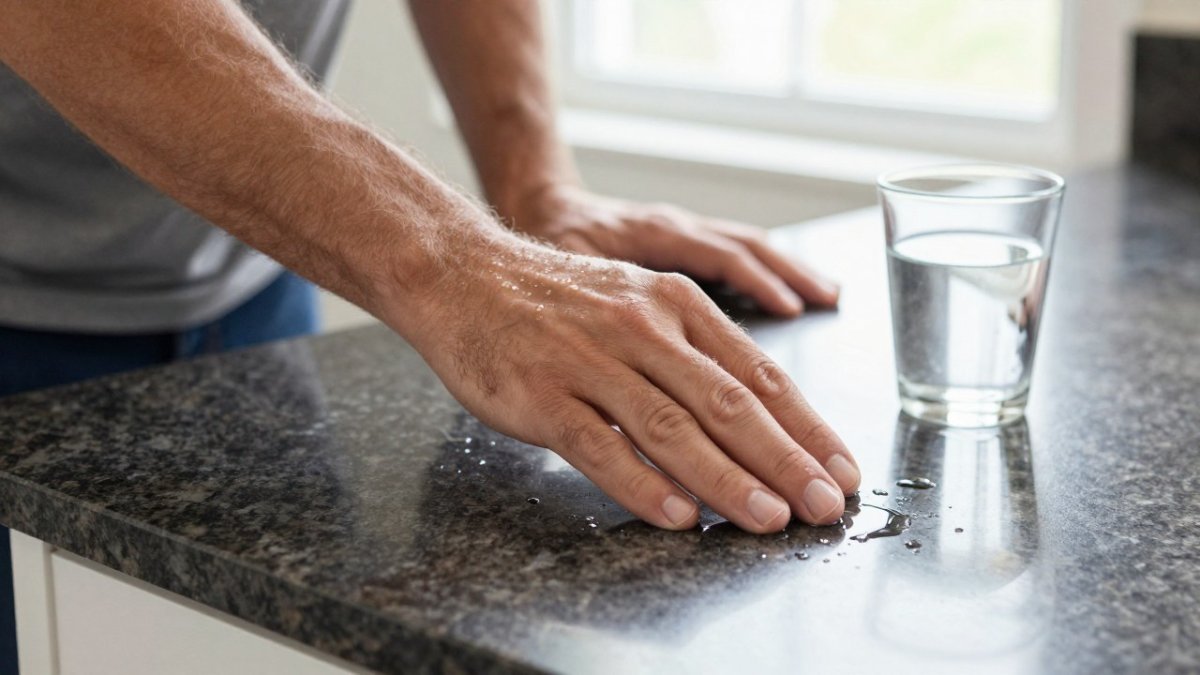
If water soaks in and leaves a mark, the sealer has worn through. For set-in oil, our guide on removing oil stains from natural stone covers the process, and removing old stains from stone countertops handles tougher marks.
Granite that absorbs water today will stain tomorrow. If testing feels like guesswork, let Johnny Stone Work handle it. We specialize in granite and marble restoration, offer professional sealing with long-term protection, and provide free estimates for homes and commercial spaces across Manhattan and the NYC area. Get started with Johnny Stone Work and keep your countertops protected.
Frequently Asked Questions
Do you really need to seal granite every year?
Not always. Sealing frequency depends on the stone’s porosity, the sealer formulation, and how heavily the surface is used. A dense, dark granite treated with a high-performance penetrating sealer may hold protection for several years, while a porous, light-colored stone in a busy kitchen may need reapplication sooner. Test with the water-drop method rather than sealing on a fixed calendar schedule.
How can I tell if my granite has been sealed?
Place a few drops of water on the surface and wait about 15 minutes. If the water beads up and stays on top, the granite sealer is still working. If the water spreads or darkens the stone, the sealer has worn thin and the granite needs resealing. This simple test works on any natural stone countertop and takes only a few minutes.
How long should granite countertops stay dry after sealing?
Most penetrating sealers need 24 to 48 hours to cure fully, and the surface should stay dry during that window. Check the product label for the manufacturer’s recommended curing time, since formulations vary. Avoid placing dishes, cutting boards, or wet items on the counter until curing is complete, and keep the area ventilated while the sealer sets.