Last Updated: November 25, 2026
Quick Summary
Granite sealing is worth the cost when your countertop is porous, light-colored, or prone to staining, since a penetrating sealer slows absorption and buys time on spills. Many granite tops never need sealing, so test first with the water test and then decide.
- Seal granite only if a water test shows the stone absorbs liquid quickly.
- Most granite needs resealing every one to two years, while dark, dense granite can go far longer.
- Porous, light stone may need sealing yearly, so let the water test tell you when it is due.
- Sealing a damp counter traps moisture and causes cloudy patches, so wait until the stone is bone dry.
- You can seal granite countertops yourself as a low-risk weekend job on a sound, non-porous slab.
Table of Contents
- Is Granite Sealing Worth the Cost?
- Pros and Cons of Sealing Granite Countertops
- How Often Should You Seal Granite?
- How to Seal Granite Countertops
- Can You Seal Granite Countertops Yourself?
- Is Granite Sealing Worth the Cost?
- Frequently Asked Questions
Is Granite Sealing Worth the Cost?
Granite sealing is worth the cost when your countertop is porous, light-colored, or prone to staining. Many granite tops never need sealing.
Seal granite only if a water test shows the stone absorbs liquid quickly. A penetrating sealer slows absorption and buys time on spills, but it does not make granite stain-proof.
Pros and Cons of Sealing Granite Countertops
Sealing resists stains from oil, wine, and coffee. But sealer wears off, poor application traps moisture or leaves streaks, and on dense, dark granite it often does nothing.
For everyday care, see how to clean and take care of stone and marble; for set-in marks, how to remove old stains from stone countertops at home.
How Often Should You Seal Granite?
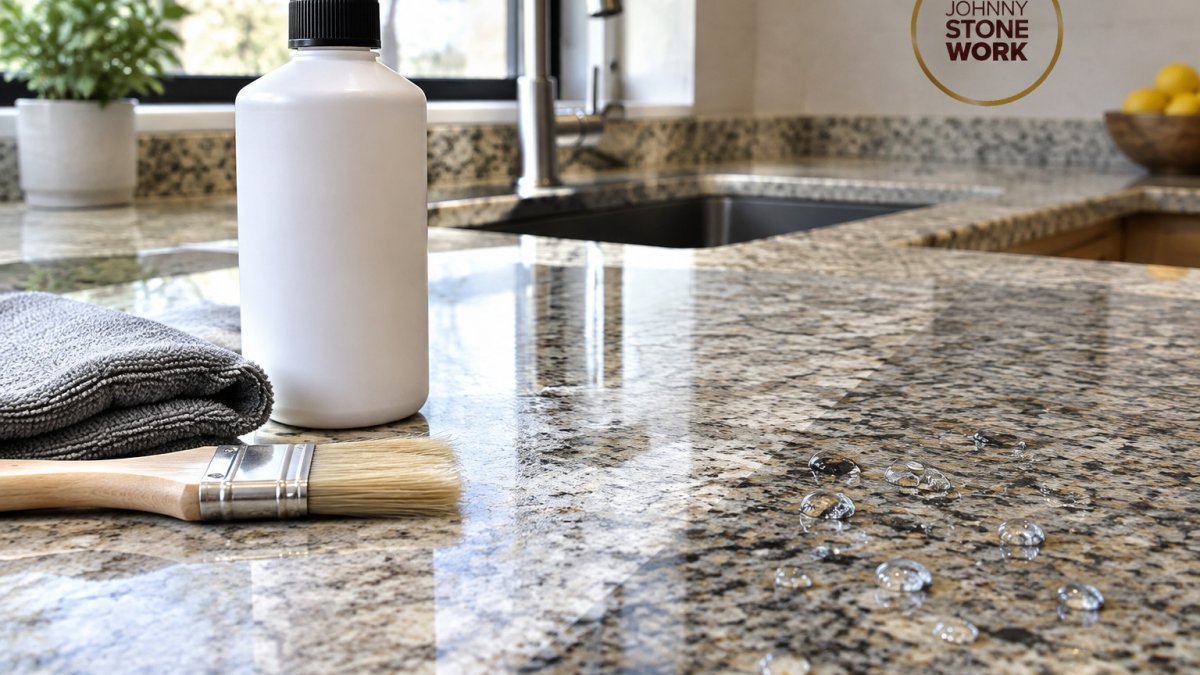
Most granite needs resealing every one to two years, but dark, dense granite can go far longer and porous, light stone may need it yearly. The water test tells you when: if drops darken the stone and soak in within minutes, it is ready for sealer; if they bead up, wait.
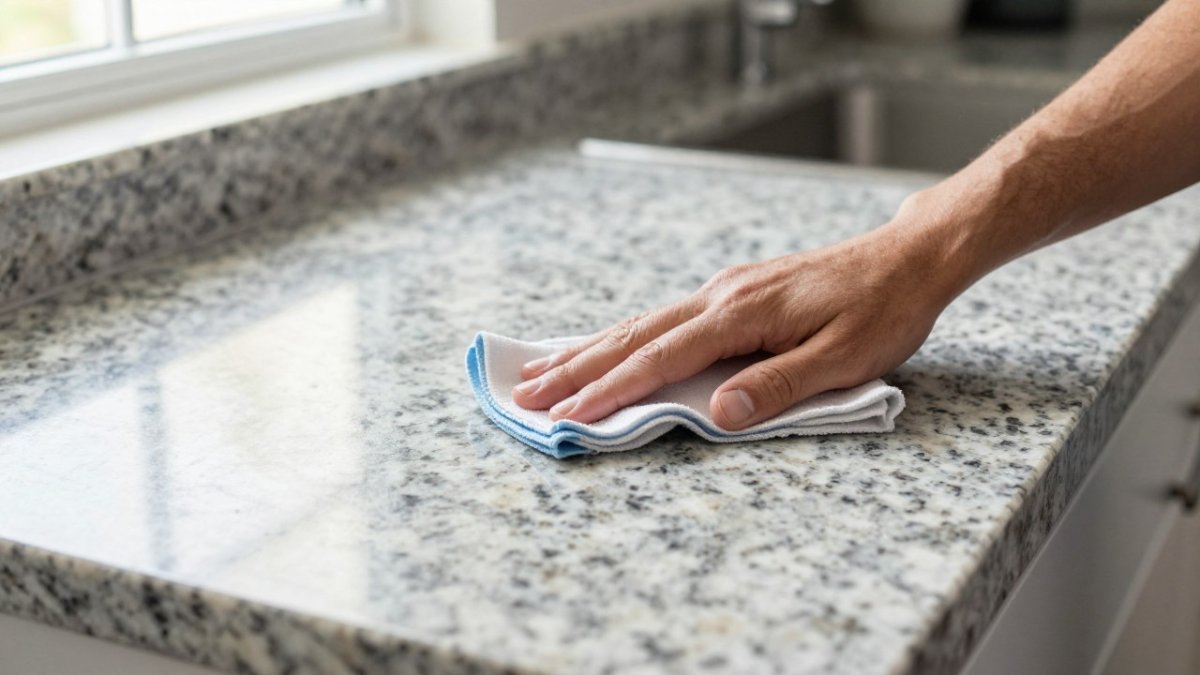
Durability depends on the product, the stone, and traffic. For the deeper breakdown, read how long does granite sealer last.
The right resealing schedule depends on the stone, and the water test tells you when it is due.
| Stone type | Resealing frequency | Water test result |
|---|---|---|
| Most granite | Every one to two years | Drops darken and soak in within minutes |
| Dark, dense granite | Far longer than one to two years | Drops bead up, so wait |
| Porous, light stone | May need it yearly | Absorbs liquid quickly |
How to Seal Granite Countertops
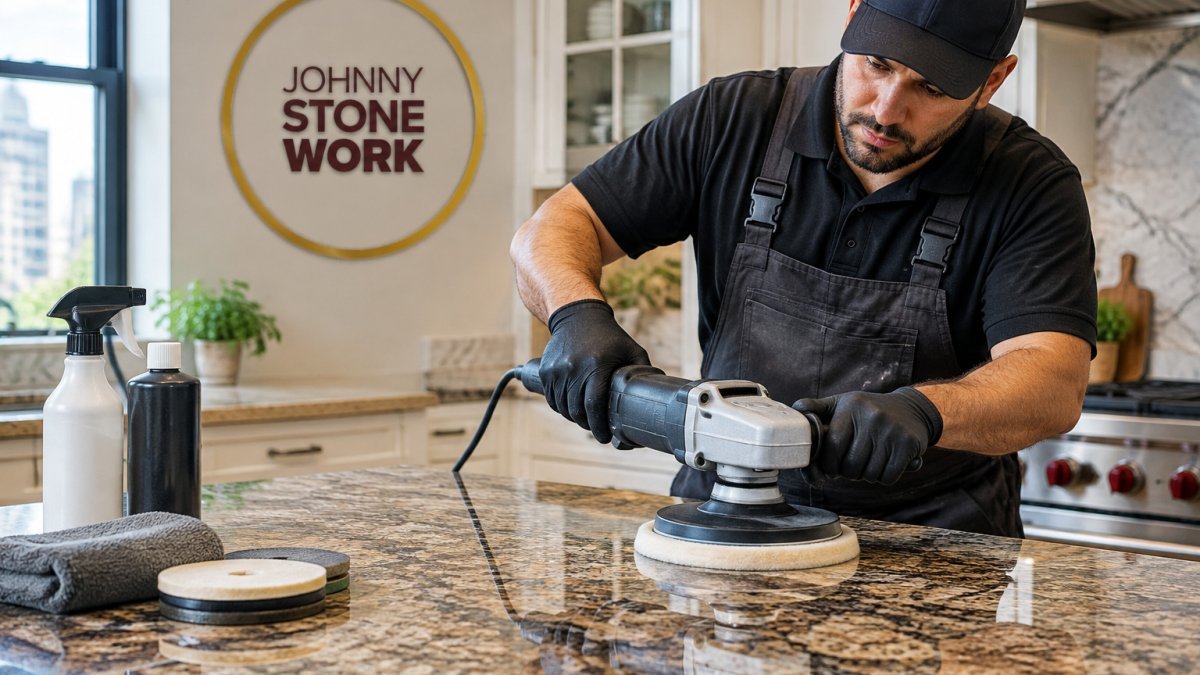
Sealing granite countertops yourself is doable if the surface is clean, dry, and you use a penetrating sealer made for stone.
- Clean with a stone-safe cleaner and dry fully.
- Confirm with the water test.
- Apply penetrating sealer thin and even with a soft cloth.
- Let it sit per the label, usually a few minutes.
- Wipe off all excess before it dries.
- Let it cure undisturbed, often overnight.
Watch out: sealing a damp counter traps moisture and causes cloudy patches. Skip a day if the stone is not bone dry.
Can You Seal Granite Countertops Yourself?
You can seal granite countertops yourself, and for a sound, non-porous slab it is a low-risk weekend job. DIY makes sense for a refresh in good shape; it stops making sense when the surface is dull, chipped, or stained, since sealer restores nothing.
Is Granite Sealing Worth the Cost?
Granite sealing is worth the cost when it protects a porous surface you would otherwise stain, and a waste when the stone is dense and already sealed. Test first, then decide.
For the professional route, see expert marble sealing services in NY, or request an estimate and we will tell you honestly whether your granite needs it.
Granite sealing only pays off when your stone actually needs it, and guessing wrong costs you either wasted money or a permanent stain. At Johnny Stone Work, we test the surface first, then seal only what needs sealing, with penetrating sealers matched to your stone type and full surface prep before application. Serving Manhattan and the wider NYC area, we give free estimates so you know exactly where you stand. Get started with Johnny Stone Work and protect your counters the right way.
Frequently Asked Questions
Do you really need to seal granite?
Not every granite slab needs sealing. Dense, dark granite with low porosity may absorb very little liquid and can go years without a sealer. Lighter, more porous granite and stone around sinks or cooktops benefits most. A simple water test tells you whether your countertop absorbs liquid: place a few drops of water on the surface and see if it darkens within 15 minutes. If it does, sealing granite is worth considering.
How often should you reseal granite?
Most sealed granite holds up for one to two years before resealing is needed, though heavy-use kitchens and porous stone may need it sooner. Rather than following a fixed calendar, repeat the water test every few months. If water no longer beads on the surface and starts soaking in, it is time to reseal. Annual maintenance checks keep the protective layer working without unnecessary applications.
Can you seal granite countertops yourself, or should you hire a professional?
DIY sealing is possible with a penetrating sealer, a clean dry surface, and careful wiping of excess product. The trade-offs are uneven coverage and missed spots on larger countertop areas. For newly installed slabs, porous stone, or commercial spaces, a professional application usually delivers more consistent long-term protection.