Last Updated: November 24, 2026
Quick Summary
To clean slate tile, sweep and vacuum loose grit first, then mop with warm water and a microfiber mop using a pH-neutral stone cleaner diluted to the label ratio. Skip vinegar, bleach, ammonia and tub-and-tile cleaners, which etch stone and strip sealer, and dry the floor to prevent water spots.
- Sweep with a soft-bristled broom and vacuum with a soft brush attachment, never a beater bar.
- Dilute pH-neutral stone cleaner to the label ratio, since over-concentrating causes dull, hazy slate.
- Mop in small sections with a damp microfiber mop, rinsing it in a second bucket of clean water.
- Clean rough cleft slate with a soft brush, then vacuum loosened grit before it dries and re-bonds.
- Seal unsealed or rough slate once fully dry so dirt cannot bond to the texture.
Table of Contents
- Step 1: Sweep and Vacuum Loose Dirt First
- Step 2: Choose the Best Slate Floor Cleaner for the Job
- Step 3: Mop with Warm Water and a Microfiber Mop
- How to Clean Rough Slate Floor Tiles That Trap Dirt
- Frequently Asked Questions
Step 1: Sweep and Vacuum Loose Dirt First
Learning how to clean slate tile starts with the dry step most people skip: loose grit acts like sandpaper under a mop and scratches the clean slate tile surface.
Here is the order that works:
- Sweep with a soft-bristled broom, corner to corner.
- Vacuum with a soft brush attachment on bare floor mode.
- Hit the grout lines and room edges last.
Never use a beater bar on slate. It chips edges and loosens grout.
Step 2: Choose the Best Slate Floor Cleaner for the Job
The best slate floor cleaner is a pH-neutral stone cleaner diluted to the label ratio, following the dilution ratio on the label, since over-concentrating is a common cause of dull, hazy slate. Acids and harsh alkalis etch natural stone and strip sealer, so skip vinegar, bleach, ammonia sprays, and tub-and-tile cleaners.
Match the product to the finish before you buy:
- Honed or polished slate: pH-neutral cleaner only, with a damp microfiber mop; abrasive powders and scrub pads dull the sheen.
- Cleft or natural-cleft slate: pH-neutral cleaner plus a soft brush; a mild alkaline stone cleaner is acceptable for heavy soil, then rinse.
- Sealed slate: pH-neutral cleaner maintains the sealer; avoid degreasers that break down the coating.
- Unsealed slate: clean gently and seal once fully dry, since unsealed slate absorbs spills.
Not sure whether your tile is slate or a lookalike? Real slate is cleft, varies in color tile to tile, and sounds dense when tapped; porcelain slate-look tile is uniform with a repeating printed pattern. Porcelain tolerates more; natural stone does not.
Watch out: Mineral content in tap water plus excess cleaner can leave a white haze that looks like damage but is residue. Rinse with clean water and dry with a microfiber towel.
For everyday care, our guide on how to clean and take care of stone and marble covers the basics. If you would rather have the right product matched to your floor, request an estimate.
Match the cleaner and tool to your slate’s finish before you start.
| Slate finish | Cleaner | Tool or note |
|---|---|---|
| Honed or polished | pH-neutral cleaner only | Damp microfiber mop; abrasives dull the sheen |
| Cleft or natural-cleft | pH-neutral cleaner; mild alkaline for heavy soil | Soft brush, then rinse |
| Sealed | pH-neutral cleaner | Avoid degreasers that break down the coating |
| Unsealed | Clean gently | Seal once fully dry; absorbs spills |
Step 3: Mop with Warm Water and a Microfiber Mop
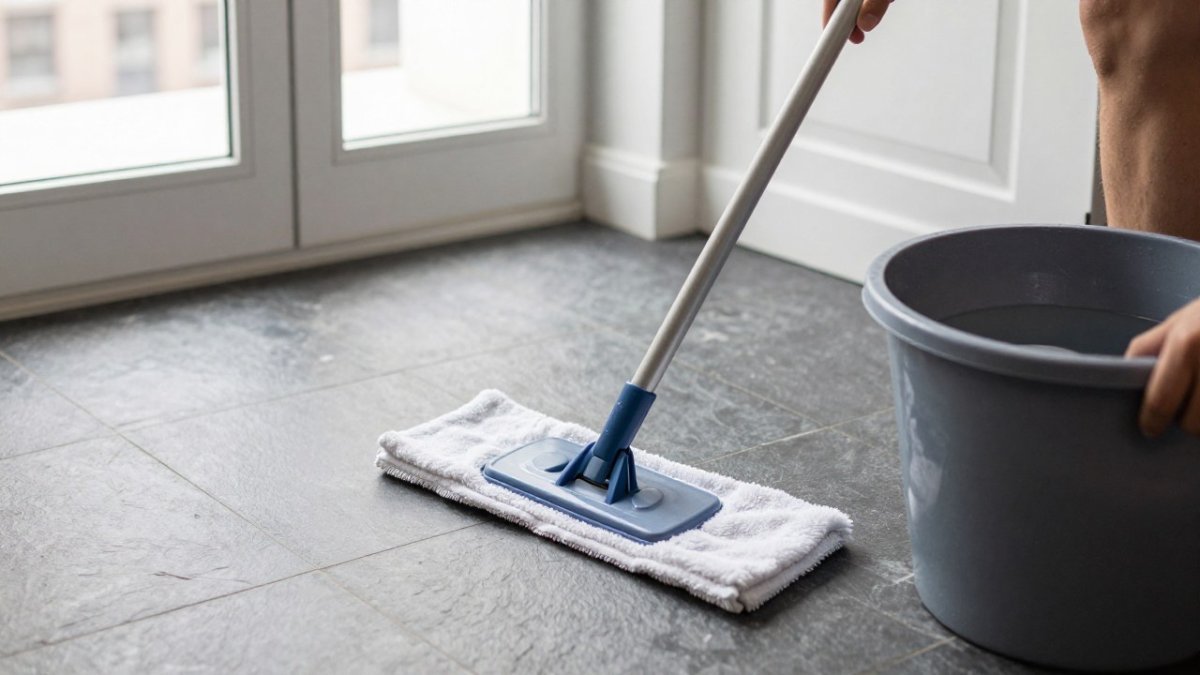
Warm water and a microfiber mop are the safest combo for slate. Microfiber lifts grit instead of pushing it around. Warm water breaks down surface grime without harsh chemicals.
Work in small sections:
- Dip the mop, then wring it until damp, not wet.
- Mop in straight lines with the tile pattern.
- Rinse the mop in a second bucket of clean water.
- Dry the floor with a clean towel to stop water spots.
Change the water often. Dirty water just redeposits grit. While cleaning, check for hairline cracks; our guide on repairing a cracked slate floor walks through the fix.
How to Clean Rough Slate Floor Tiles That Trap Dirt
Rough, cleft slate holds dirt in its texture, so it needs a soft brush and patience, not more pressure. Work a diluted stone-safe cleaner into the grain with a soft-bristled brush, then vacuum the loosened grit before it dries and re-bonds.
Grout lines, corners, and textured crevices need their own pass. A soft brush or grout brush reaches what a mop misses; work along the grout, not across it, and rinse with clean water so cleaner does not dry in the joints. If grout is missing or crumbling, our guide on how to repair missing floor tile grout shows the fix.
Stains need diagnosis before product. Test any spot treatment in an inconspicuous corner first, and never scrub hard enough to change the tile’s texture.
Outdoor slate, a stoop, patio, or garden path, collects moss and grit differently. Sweep, scrub with a stone-safe cleaner, rinse, and dry fully before sealing; never power-wash rough slate at high pressure, which erodes the cleft and grout.
Seal rough slate after cleaning, once fully dry, a penetrating sealer keeps dirt from bonding to the texture and makes the next clean easier. If staining persists after a proper clean, the sealer is failing or the stone is etched, and it is time for a stone-care professional. For heavy soil in commercial spaces, professional grout and tile cleaning in Astoria, Long Island and Manhattan handles what a mop cannot.
Slate rewards a gentle routine: dry soil removal, a stone-safe cleaner, and a damp microfiber mop. If your floor has chips, stubborn stains, or worn sealer, Johnny Stone Work restores slate, marble, and granite across Manhattan and the wider NYC area. Our team handles deep cleaning, sealing for long-term protection, and repair work, all backed by free estimates and 163 happy customers. Get started with Johnny Stone Work and bring your slate floor back to a clean, protected finish.
Frequently Asked Questions
What is the best thing to clean slate tile with?
A pH-neutral stone cleaner diluted in warm water is the safest choice for everyday cleaning. Avoid acidic products like vinegar or lemon juice, which can etch natural stone, and skip harsh alkaline cleaners on unsealed slate. For routine upkeep, sweep or vacuum loose grit first, then mop with a microfiber pad and rinse with clean water to prevent residue from dulling the surface.
Can you clean slate tile with vinegar?
No. Vinegar is acidic and can slowly etch slate, especially unsealed or honed finishes, leaving dull patches that no mop will fix. Use a pH-neutral cleaner instead. If you want a natural slate floor cleaner, a few drops of mild dish soap in warm water works for light soil, but rinse thoroughly so soap film does not attract new dirt.
How often should slate tile be sealed?
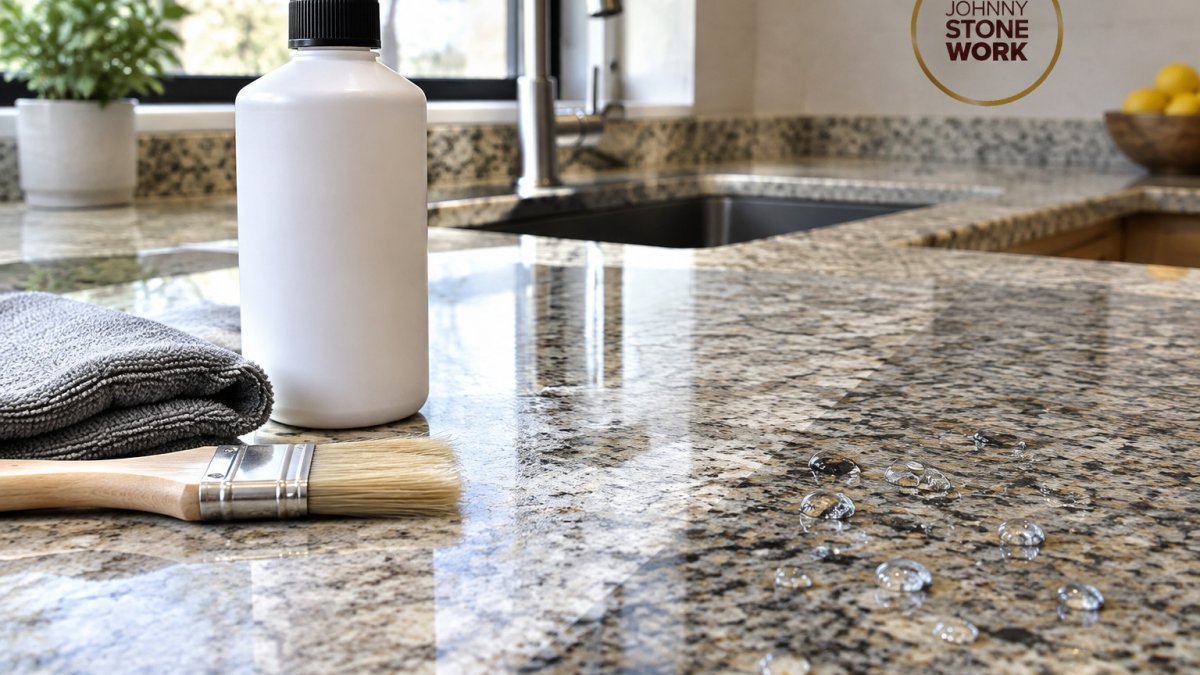
Sealed slate floors need resealing periodically, depending on foot traffic and whether the slate is indoors or outdoors. Test by dripping water on the surface: if it soaks in instead of beading, it is time to reseal.