Last Updated: November 27, 2026
Quick Summary
To protect stone surfaces in winter, seal them with a vapor-permeable water-repellent sealer before freezing temperatures arrive, applied on a dry day above 50°F. Keep joints filled, clear debris so meltwater drains, use magnesium chloride instead of rock salt, and sweep and mop salt off floors promptly.
- Freeze-thaw cycles are the biggest winter threat to Manhattan stone, since water seeps into pores and pries the surface apart.
- Reseal when a water drip darkens a spot instead of beading, and let the sealer cure before the first snow.
- Rock salt crystals scratch polished surfaces and its residue etches stone, so avoid it on stone.
- Sweep dry salt first, then mop with warm water and a pH-neutral stone-safe cleaner, and dry fully.
- Call a professional for spalling, deep chips in slate, loose pavers, or stains that survive two cleaning attempts.
Table of Contents
- Why Winter Is Hard on Stone in Manhattan
- How to Protect Natural Stone Countertops Indoors
- Natural Stone Sealing Before Freezing Temperatures Hit
- Protecting Exterior Stone from Freeze-Thaw Damage
- Choosing Ice Melt That Is Safe for Stone
- Cleaning Road Salt Off Stone Floors
- Preventing Scratches and Stains All Season
- When to Call a Professional
- Frequently Asked Questions
Why Winter Is Hard on Stone in Manhattan
Freeze-thaw cycles are the biggest threat to stone in Manhattan: water seeps into pores, expands overnight, and pries the surface apart. Winter damage to brownstone steps, bluestone pavers, and marble lobbies is common in the NYC area. This guide covers 7 ways to protect stone surfaces before the first hard freeze. The American Society for Testing and Materials standards on stone durability treat porosity as the root cause, and so should you.
How to Protect Natural Stone Countertops Indoors
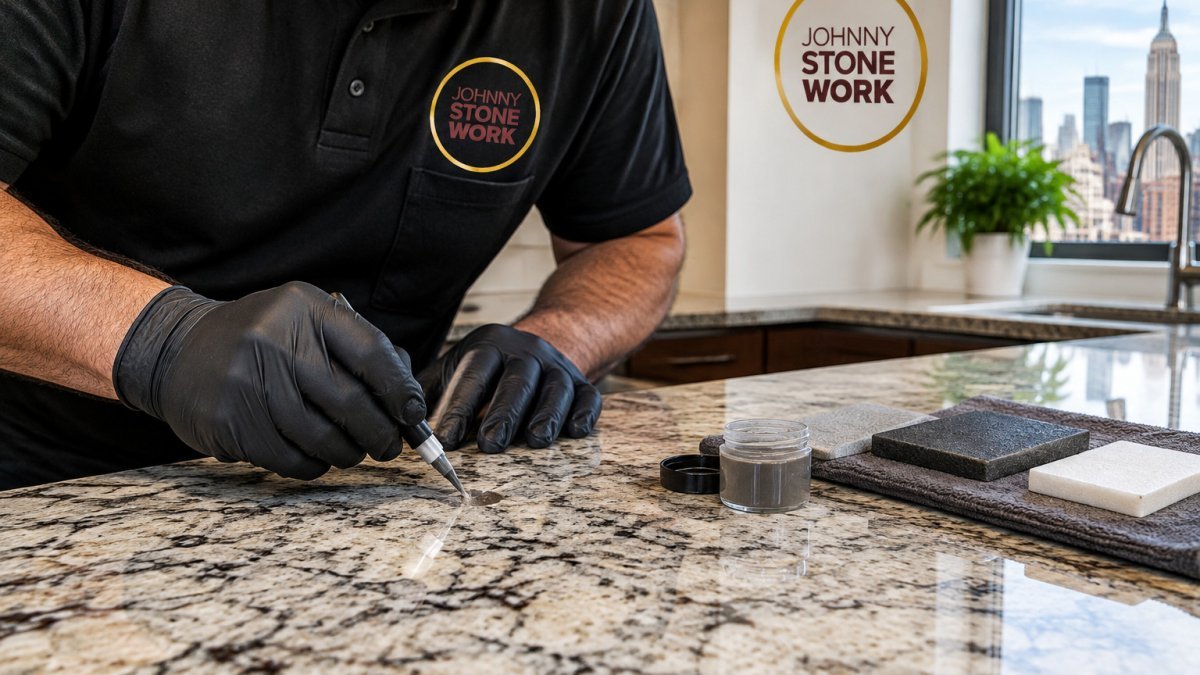
Indoor stone faces tracked-in road salt, hot pots, and acidic spills. Use rubber-backed mats at entrances, wipe up spills promptly, and clean with a stone-safe cleaner. For a full walkthrough, read how to clean and take care of stone and marble; if sealing is on your list, start with the best product for sealing marble countertops.
Natural Stone Sealing Before Freezing Temperatures Hit
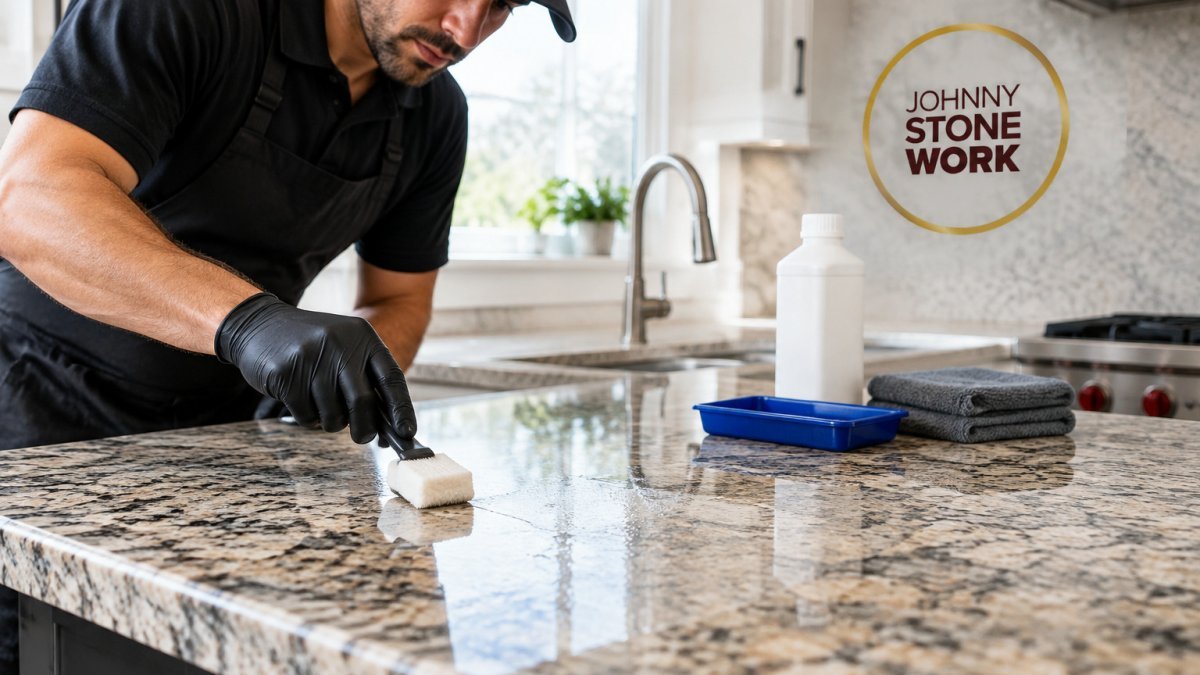
Natural stone sealing is the highest-value step before freezing temperatures arrive: a water-repellent sealer fills surface pores so meltwater beads instead of soaking in. If a water drip darkens a spot instead of beading, reseal, apply a vapor-permeable sealant on a dry day above 50°F and let it cure before the first snow. See how long granite sealer lasts and Anti-Etch certified stone protection, then request an estimate.
Protecting Exterior Stone from Freeze-Thaw Damage
Exterior stone takes the brunt of a Manhattan winter, showing spalling, joint sand loss, and settling pavers. Protecting exterior stone generally involves sealing horizontal surfaces, keeping joints filled, and directing drainage away from the substrate.
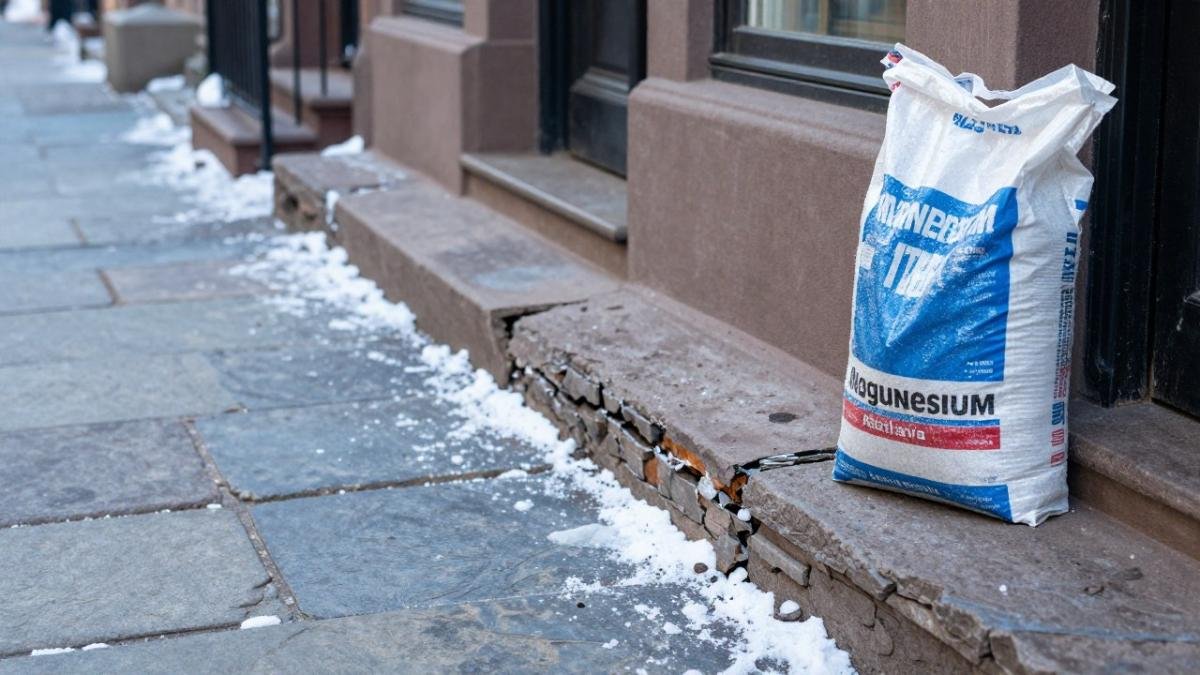
Clear leaves and debris so meltwater drains, and never let snow piles sit against stone walls.
Choosing Ice Melt That Is Safe for Stone
Rock salt is the enemy: sodium chloride crystals scratch polished surfaces and its residue etches stone. Magnesium chloride is often considered gentler on stone than rock salt. Apply sparingly, sweep up leftovers, and keep sand for traction on steps.
Here is how the two common de-icers compare for stone surfaces.
| De-icer | Effect on stone | How to use it |
|---|---|---|
| Rock salt (sodium chloride) | Crystals scratch polished surfaces; residue etches stone | Avoid on stone |
| Magnesium chloride | Often considered gentler on stone than rock salt | Apply sparingly and sweep up leftovers |
| Sand | Not a de-icer; used for traction | Keep for traction on steps |
Cleaning Road Salt Off Stone Floors
Removing road salt from stone floors is best done promptly: sweep dry salt first, then mop with warm water and a pH-neutral stone-safe cleaner, and dry the floor fully.
Preventing Scratches and Stains All Season
Tracked-in grit is a silent scratch machine, so use rubber-backed mats at every door. Inside, use cutting boards, pot holders, and coasters, and lift furniture rather than dragging it. For stains, blot rather than rub, and consult a stone restoration professional for etched marble or deep-set stains.
When to Call a Professional
Call a professional when you see spalling, deep chips in slate, loose pavers, or stains that survive two cleaning attempts. Johnny Stone Work restores marble, granite, and slate across the NYC area, and offers free estimates. We serve residential and commercial clients, and our sealing and restoration services are designed to help protect and extend the life of stone surfaces.
Winter will test every stone surface you own, and the difference between a minor touch-up and a full restoration comes down to preparation. Johnny Stone Work specializes in marble polishing and restoration, sealing, and repair for homes and commercial buildings throughout Manhattan and the NYC area. Get started with Johnny Stone Work and protect your stone before the first freeze.
Frequently Asked Questions
Can road salt damage natural stone floors?
Yes. Rock salt and other chloride deicers dissolve into brine that seeps into the pores of natural stone, then expands as it refreezes. On marble, limestone, and slate this causes spalling, pitting, and dull etch marks that no amount of mopping will fix. Sweep up tracked-in salt as soon as you see it, mop with a pH-neutral stone-safe cleaner, and switch to magnesium chloride or sand on exterior walks. If salt stains have already set, a stone restoration professional can assess the surface.
Does natural stone need sealing before winter?
Most natural stone benefits from a vapor-permeable water-repellent sealer applied in fall, before freezing temperatures arrive. Sealing slows water absorption, which is what drives freeze-thaw damage outdoors and stain absorption indoors. A simple test is to place a few drops of water on an inconspicuous spot and see whether it beads or soaks in. If it soaks in, the stone is ready for natural stone sealing. Avoid film-forming sealants on exterior stone because they trap moisture and can flake off.
How do you protect stone countertops in winter?
Keep hot pots and pans on trivets, use cutting boards instead of slicing directly on the surface, and wipe up wine, citrus, and oil spills immediately, since winter entertaining puts stone countertops under extra strain. Place coasters under glasses and a mat under the drying rack. For quartz, avoid heat altogether because resin binders can scorch. If a stain has been sitting for months, a stone restoration professional can advise on the best approach for removing it.