Quick Summary
Old stains on stone countertops can often be removed at home with a baking soda poultice. Make a thick paste, spread it over the stain, cover it with plastic wrap, and leave it for 24 to 48 hours before rinsing. Stubborn stains usually need two or three rounds.
- Test a hidden spot first, since vinegar fizzing means the stone is calcium-based.
- Mix baking soda with water to a toothpaste-like texture and spread it half an inch past the stain.
- Cover the paste with plastic wrap and tape the edges to slow evaporation.
- Leave the poultice for 24 to 48 hours before scraping, rinsing and drying.
- Avoid vinegar, lemon juice, bleach and abrasive scrubbers on natural stone.
Table of Contents
- Identify Your Stone and Stain Type Before You Start
- How to Remove Old Stains From Stone Countertops With Baking Soda
- What Not to Use on Stone Countertops
- Book a Professional Stone Assessment for Stains That Persist
- Frequently Asked Questions
Old stains on stone countertops rarely wipe away. Oil, wine, coffee and ink soak into the pores of marble, granite and limestone, but what looks permanent often lifts with the right method and some patience. Johnny Stone Work restores marble, slate and granite surfaces, so we know how stone responds to cleaning and which approaches can make stains worse.
First, identify your stone type and stain type. Getting both right makes the rest of the process much simpler.
Identify Your Stone and Stain Type Before You Start
Most kitchen countertops are granite, marble, quartzite, limestone or engineered stone. Marble and limestone are calcium-based and porous, so acids like lemon juice and vinegar damage them. Granite is harder but its seams can still hold stain. To test, drop vinegar on a hidden spot: if it fizzes or leaves a dull mark, the stone is calcium-based.
Stain type matters just as much:
- Oil-based stains (cooking grease, lotion, makeup) look dark and spread into the stone.
- Organic stains (coffee, tea, wine, fruit juice) leave brownish or pinkish rings.
- Metal stains (rust from pots) leave orange or black marks.
- Ink and dye stains are the hardest to lift.
Test any cleaner on a small, hidden area first. Some sealers react to solvents, and a bad test is far cheaper than a dulled countertop.
How to Remove Old Stains From Stone Countertops With Baking Soda
For most old organic and oil stains on sealed or lightly porous stone, a baking soda poultice is the safest start. It is a paste that sits on the stain and slowly draws it out of the surface.
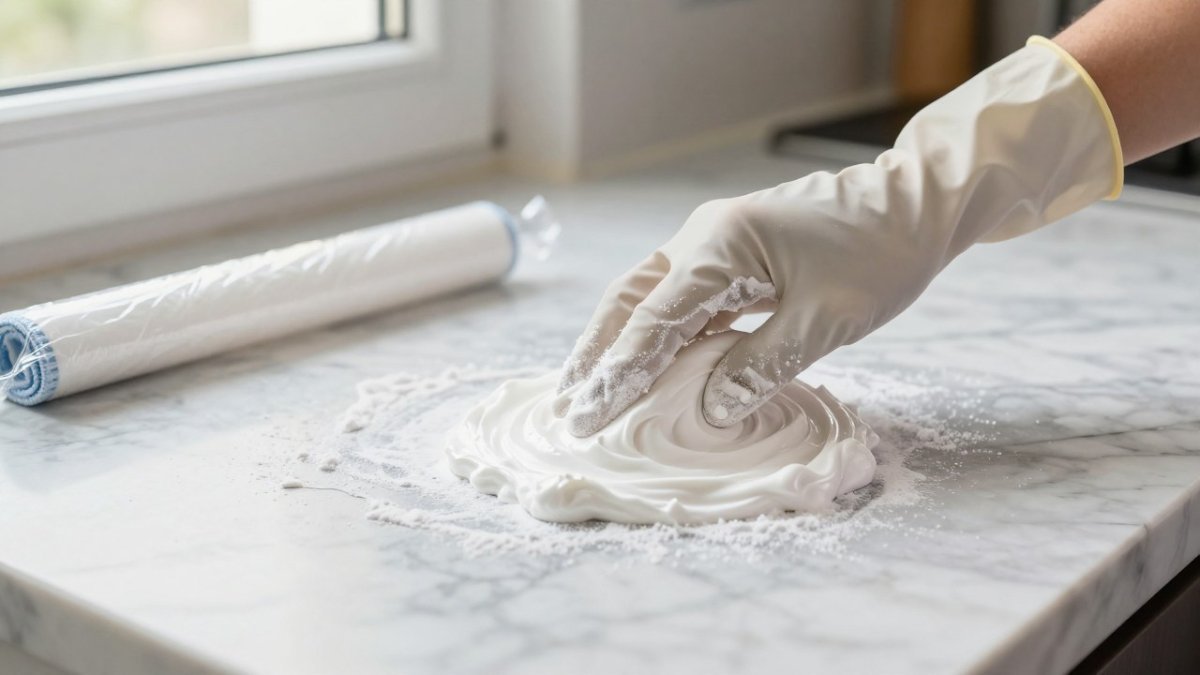
Here is the method we use:
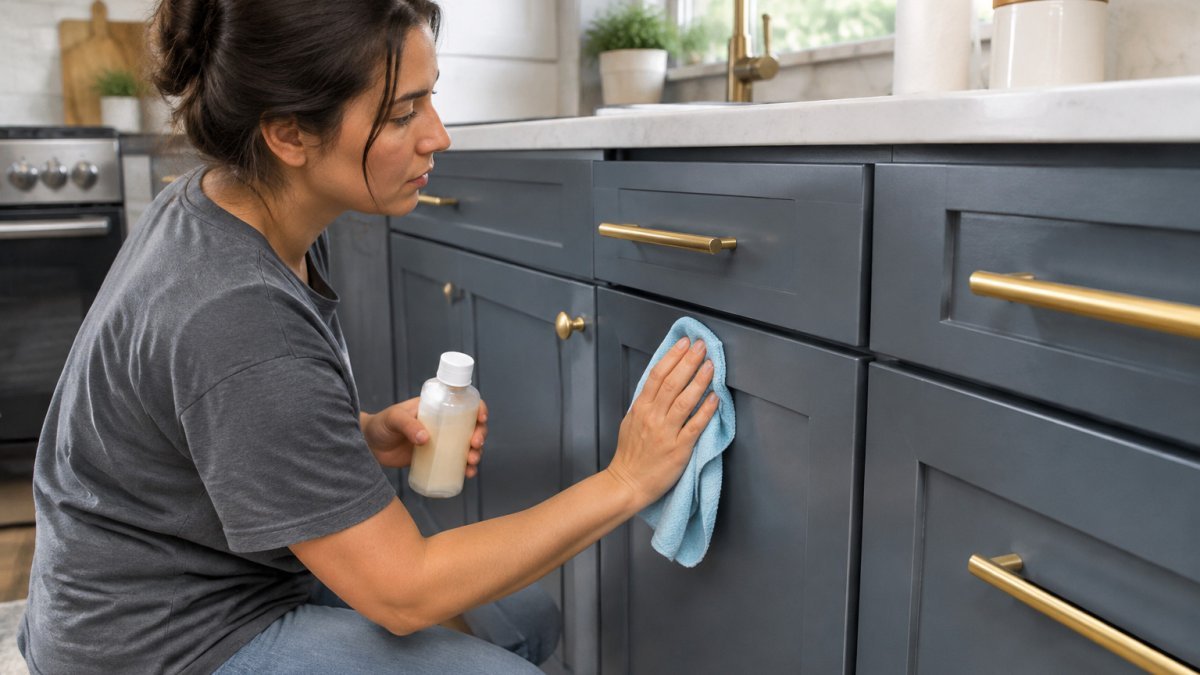
- Clean the surface. Wipe the counter with a pH-neutral stone cleaner or a few drops of dish soap in warm water. Rinse and dry it fully.
- Mix the paste. Combine baking soda with just enough water to make a thick, spreadable paste, about the texture of toothpaste.
- Apply it thickly. Spread the paste over the stain, extending about half an inch past the edges.
- Cover it. Place plastic wrap over the paste and tape the edges. This slows evaporation so the poultice keeps drawing the stain out.
- Let it sit. Leave it for 24 to 48 hours. Older stains often need the full time.
- Remove and rinse. Scrape off the dried paste, wipe with a damp cloth, then rinse with clean water and dry.
- Check the result. If a faint shadow remains, repeat the process once more.
Stopping after one application is a common mistake. Stubborn stains usually need two or three poultice rounds.
Here is the step-by-step poultice method, with the timing for each stage.
| Step | What to do | Time or frequency |
|---|---|---|
| 1. Clean the surface | Wipe with pH-neutral stone cleaner or dish soap, rinse, dry | Before starting |
| 2. Mix the paste | Baking soda plus water, toothpaste texture | Just before use |
| 3. Apply thickly | Spread over stain, extend half an inch past edges | Immediately |
| 4. Cover | Plastic wrap, taped edges | Throughout |
| 5. Let it sit | Leave undisturbed | 24 to 48 hours |
| 6. Remove and rinse | Scrape off, wipe damp, rinse, dry | After sitting |
| 7. Check result | Repeat if a faint shadow remains | Once more if needed |
What Not to Use on Stone Countertops
Some popular household cleaners cause more damage than the stain itself. Avoid these on natural stone:
- Vinegar, lemon juice and other acids. They etch marble and limestone, leaving dull spots that look like a new stain.
- Bleach and ammonia. They can discolor stone and break down sealers.
- Abrasive scrubbers and steel wool. They scratch the polished surface.
- Harsh chemical strippers. Stronger solvents can dissolve the sealer and leave the stone exposed.
Keep stone-safe cleaners on hand, store bleach and strong chemicals out of reach, and never mix cleaning products, since some combinations release harmful fumes. Wear gloves and ventilate the room when using any solvent.
Book a Professional Stone Assessment for Stains That Persist
Some stains won’t lift at home. Deep metal stains, etching that has soaked in, and sealer failure often need professional help. A professional stone restorer can assess the damage and recommend the appropriate treatment.
If your stain hasn’t lifted after two poultice rounds, or the stone looks dull or uneven, book a professional stone assessment with Johnny Stone Work. We offer free estimates. For a specific mark, see how to remove wine stains from marble safely. To protect the surface afterward, read what the best product is for sealing marble countertops. For repairs beyond cleaning, request a free quote from our marble repair specialists or contact Johnny Stone Work to schedule an appointment.
Frequently Asked Questions
Can baking soda remove stains from natural stone?
Baking soda can draw out many old organic and food stains from natural stone when mixed with water into a paste and left under plastic wrap for 24 to 48 hours. It works because the paste absorbs the stain as it dries. Test an inconspicuous area first, since baking soda is mildly abrasive and some polished or soft stones can dull. Stains from oil or rust often need a specialized poultice, and if the stain does not lift after two or three applications, a professional restorer can assess it.
What not to use on stone countertops?
Avoid vinegar, lemon juice, bleach, ammonia, and abrasive scouring pads on natural stone like marble, limestone, and granite. Acids etch calcium-based stones and leave dull spots, while harsh chemicals can strip sealer. Also avoid mixing cleaners, since combinations can release harmful fumes. Use a pH-neutral stone cleaner or mild dish soap and water, and wipe with a soft cloth. Most stone countertop problems are caused by the wrong cleaner rather than the stain itself.
How can you tell whether a stone countertop stain is permanent?
A stain is more likely to be removable if it is organic, such as coffee or wine, and the surface is sealed and unetched. Etching, a dull mark caused by acid, is a surface change rather than a stain and usually needs polishing. Stains that remain after several poultice cycles, or that have penetrated deeply into porous stone, may be permanent without professional restoration. If the stain has not changed after repeated treatment, stop and consult a stone care specialist.