Last Updated: November 14, 2026
Quick Summary
Effective marble floor maintenance starts with daily dry removal of grit, followed by weekly damp mopping with a pH-neutral stone cleaner and rinsing with clean water. Schedule deep work annually, seal the stone, and blot spills immediately to prevent etching.
- Sweep or dust mop the full traffic path daily before any liquid touches the floor.
- Use a pH-neutral stone cleaner with no acids, abrasives, or added wax.
- Vacuum walk-off mats daily and swap them when saturated to cut incoming grit.
- Set up wet-floor signs before mopping begins and buff dry within minutes.
- Track gloss readings at fixed test points to catch finish loss early.
Table of Contents
- Why Commercial Marble Floor Maintenance Fails in High-Traffic Buildings
- How to Clean Marble Floors: Daily, Weekly, and Annual Steps
- The Best Cleaner for Marble Floors (and What to Avoid)
- How to Seal Marble Floors So the Finish Lasts
- A Commercial Stone Floor Maintenance Schedule by Traffic Level
- Commercial Equipment and Machine Settings for Lobbies and Common Areas
- Prompt Spill Cleanup, Stain Removal, and Etching Repair
- Slip-Risk Management and Wet-Floor Procedures
- Measuring Results: Inspection Criteria and Maintenance KPIs
- Book a Free Marble Maintenance Estimate for Your Building
- Frequently Asked Questions
Why Commercial Marble Floor Maintenance Fails in High-Traffic Buildings
Most commercial marble failures are not cleaning failures. They are grit failures. Abrasive particles get walked in, stay on the surface, and get ground across the stone by foot traffic until the polish wears thin and the floor reads as dull. Marble floor maintenance in a busy building is really a grit-control program first and a cleaning program second.
The second failure is chemistry. Acidic cleaners etch calcium-based stone, and harsh alkaline products strip sealers and leave residue that traps soil.
High-traffic areas also expose the weak points: entrances, elevator lobbies, and service corridors. These zones need a different maintenance frequency than back offices, which is why a single building-wide routine rarely holds up.
Natural Stone Institute stone care guidance confirms that most surface damage on natural stone comes from routine wear rather than one-off accidents.
If you want the full playbook on protecting commercial stone across an entire property, our guide on how to maintain commercial stone floors covers the wider program.
How to Clean Marble Floors: Daily, Weekly, and Annual Steps
The best way to clean marble floors is a three-tier routine: dry removal of grit daily, controlled damp cleaning weekly, and periodic deep work annually. Splitting tasks by frequency keeps labor predictable and stops the two most common errors, over-wetting and over-scrubbing.
Daily Sweeping, Dust Mopping, and Vacuuming
Start every day with dry methods before any liquid touches the floor. Sweep or dust mop the full traffic path with a wide microfiber pad, then vacuum edges and mats with a hard-floor attachment. The goal is to remove grit while it is still loose. A common mistake is skipping the dry pass and going straight to a mop, which turns dust into a thin abrasive slurry.
Damp Mopping and Rinsing with a pH-Neutral Cleaner
Damp mopping means a mop that is damp, not wet. Use a pH-neutral, stone-safe cleaner mixed to the label dilution, work in small sections, and rinse with clean water before the surface dries. Cleaner residue is the hidden problem: it attracts soil and dulls the finish. Change water often and keep two mops, one for solution and one for rinse.
For more on bringing back shine between professional visits, see our tips on making marble floors shiny and clean.
The Best Cleaner for Marble Floors (and What to Avoid)
The best cleaner for marble floors is a pH-neutral stone cleaner with no acids, no abrasives, and no added wax. Mild detergent solutions work for light soil when diluted properly. Anything labeled for tile and grout with an acid base is the wrong product for polished marble.
Avoid these:
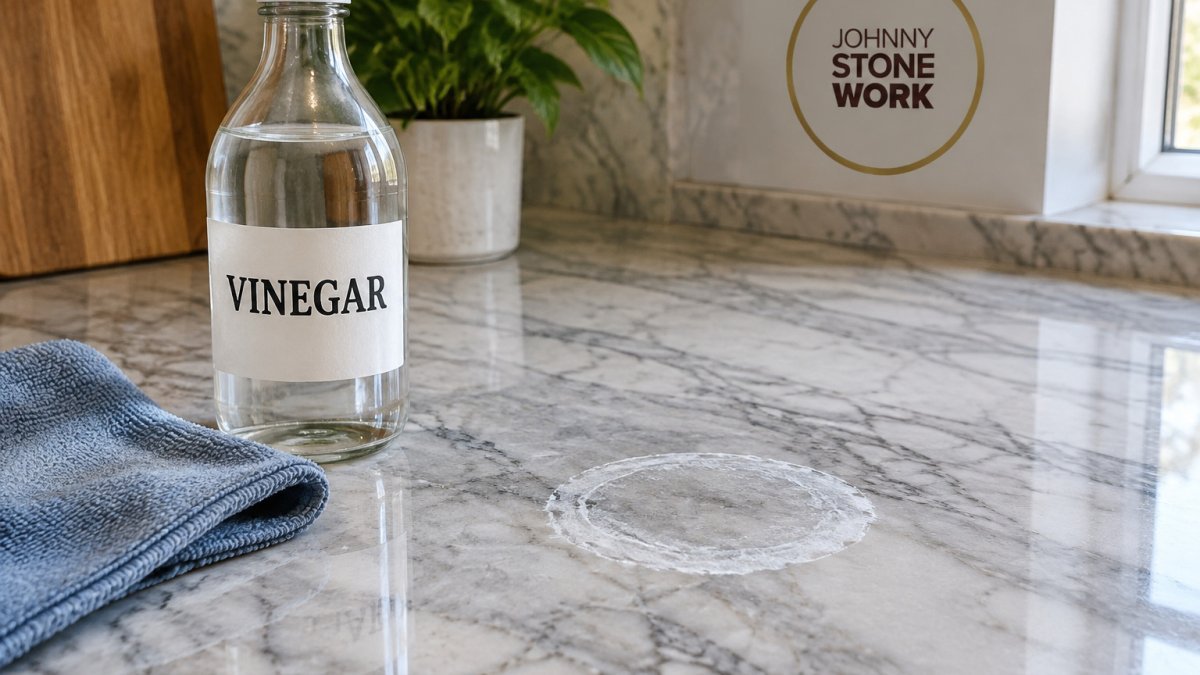
- Acidic cleaners, including vinegar, lemon, and most bathroom descalers, which etch the surface
- Harsh alkaline degreasers that strip sealer and leave film
- Abrasive powders and scrub pads that scratch a polished finish
- Ammonia-heavy glass cleaners used as a quick fix
Watch out: a single vinegar wipe leaves a visible etch mark on polished marble that no amount of mopping will remove. Etching is chemical damage, not dirt, and it requires mechanical refinishing.
How to Seal Marble Floors So the Finish Lasts
Sealing marble floors means applying a penetrating sealer that soaks into the stone and slows liquid absorption without changing the look of the surface. It does not make marble stain-proof, and it does not replace polishing.
The process: clean and fully dry the floor, apply the sealer in thin even coats with a lint-free applicator, let each coat absorb per the product instructions, then buff off excess before it dries. Cure time matters, so keep traffic off the floor for the full window the label specifies.
Sealer life depends on traffic and cleaning chemistry. In a busy lobby, expect to revisit it more often than in a quiet office. For sealing work, contact Johnny Stone Work for a current quote.
A Commercial Stone Floor Maintenance Schedule by Traffic Level
A commercial stone floor maintenance schedule should scale with traffic and facility type, not with square footage alone. The table below turns general care advice into a workable cadence for the four settings most commercial teams manage. Treat the frequencies as starting points and adjust after a month of inspection data.
| Facility Type | Daily | Weekly | Monthly | Quarterly | Annual |
|---|---|---|---|---|---|
| Hotel lobby and arrival areas | Dust mop full path 2-3 times; spot damp mop spills; vacuum mats | Damp mop with pH-neutral cleaner and rinse; check sealer sheen at entrances | Deep clean grout lines and edges; inspect etch marks; rotate mats | Light polish or buff check on high-traffic lanes; review gloss readings | Full sealer evaluation; plan restoration if gloss has dropped across test points |
| Office building common areas | Dust mop main corridors and elevator banks; spot clean | Damp mop corridors and elevator lobbies; vacuum walk-off mats | Edge and corner detail clean; inspect for new scratches | Buff check on polished surfaces; review spill logs | Sealer inspection; schedule deep clean before peak season |
| Retail sales floor | Dust mop traffic aisles; spot clean spills immediately | Damp mop aisles and entry zones; rinse and dry | Inspect display perimeters and checkout lanes for grit buildup | Gloss check at fixed points; review mat condition | Sealer evaluation; plan periodic polish |
| Restaurant and food service | Sweep and spot mop during service; dry mop after close | Damp mop with stone-safe degreaser alternative; rinse thoroughly | Deep clean under and around seating; check for oil tracking | Inspect for etching near beverage stations | Sealer inspection; schedule restoration if dulling persists |
A few operating rules make the schedule hold up. Dry cleaning always comes before any liquid, because a damp mop over loose grit turns dust into an abrasive slurry. Damp mopping means a mop that is damp, not wet; rinse with clean water and dry the surface before traffic returns. Deep work should be scheduled outside peak hours so a dry path always exists.
Entry mats do more work than most maintenance contracts. A proper walk-off mat at every entrance cuts the grit reaching the marble, and mats should be vacuumed daily and swapped when saturated. In high-traffic lobbies, a mat that is curled or saturated stops doing its job and starts tracking soil inward.
Watch out: a schedule copied from a low-traffic office and applied to a hotel lobby will fail within a quarter, because entrance grit loads are several times higher and the sealer wears faster.
If you are budgeting a program, contact Johnny Stone Work for current pricing, since costs depend on the size and condition of the floor. Our guide on how to maintain commercial stone floors covers the wider program.
Commercial Equipment and Machine Settings for Lobbies and Common Areas
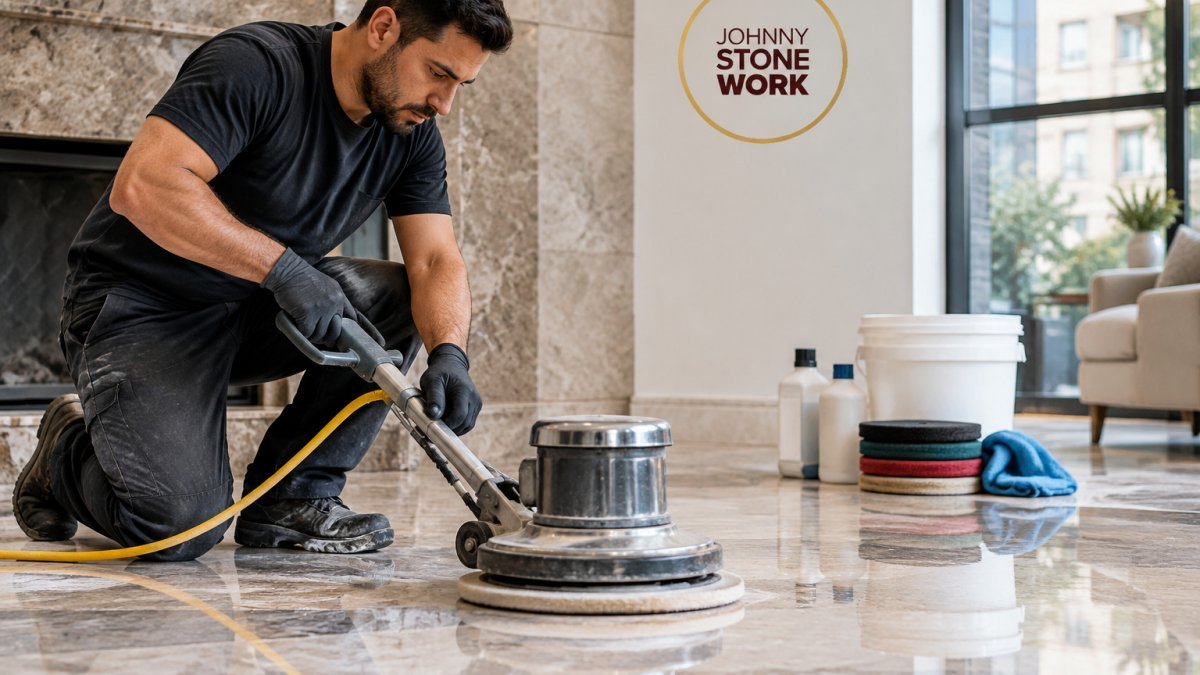
- Pad and brush choice: soft or white pads only on polished marble; use a soft brush or pad driver on autoscrubbers; never a stripping pad or a aggressive brush
- Solution flow: minimal, just enough to wet the surface; excess water drives soil into seams and slows drying
- Water pickup: verify the squeegee leaves the floor nearly dry; standing water is a slip risk and a residue source
- Machine weight: lighter machines reduce risk on older, thinner stone and on floors with hollow spots
- Speed: low RPM for cleaning and buffing; high speed generates heat and can burnish unevenly
- Down pressure: keep it low on polished marble; heavy pressure with a dry pad can scratch
Operating precautions for autoscrubbers:
- Test the machine and pad combination on a small, out-of-sight area before running a full lobby
- Keep the squeegee blades clean and replace worn blades, because a bad squeegee leaves streaks and residue
- Empty and refill tanks often; dirty solution redeposits soil
- Avoid running an autoscrubber over dry grit; pre-dust mop or vacuum the path first
- Schedule machine work outside peak arrival times and post wet-floor signs before starting
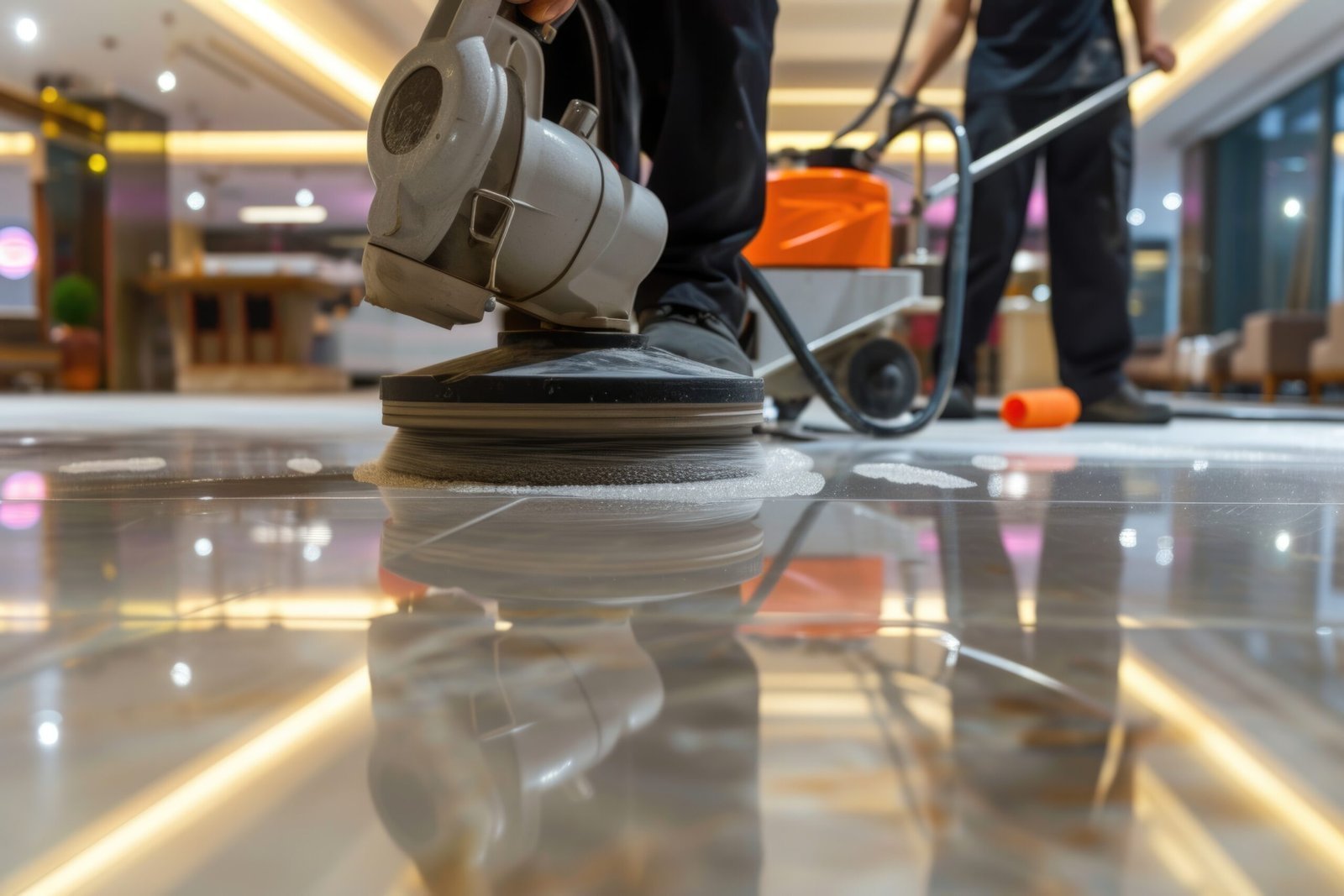
OSHA walking-working surfaces standard is the reference point for keeping floors safe during cleaning operations.
Watch out: a stiff brush or a high-pressure pad on polished marble can leave scratch patterns that only mechanical refinishing will remove, so confirm the pad or brush is rated for polished stone before the machine touches the floor.
Prompt Spill Cleanup, Stain Removal, and Etching Repair
Prompt cleanup is the single highest-return habit in marble floor maintenance. Blot spills immediately with a clean absorbent cloth, working from the outside in, then rinse and dry the area. Wine, coffee, and oil all behave differently, and the longer a spill sits, the deeper it penetrates.
Etching, a dull white mark from acid contact, is not a stain at all; it is surface damage and needs polishing or refinishing to correct.
A common mistake is scrubbing an etch with an abrasive pad, which widens the damaged area.
Slip-Risk Management and Wet-Floor Procedures
Wet marble is genuinely slippery, and a cleaning program that ignores this creates liability. Set up wet-floor signs before mopping begins, not after. Use barricades in high-traffic zones and mop in half-width passes so a dry path always exists.
Practical rules we follow:
- Never leave standing water; buff dry within minutes
- Schedule damp mopping outside peak arrival times
- Keep entrance mats flat and replace curled edges
- Train staff to report slick spots immediately
Measuring Results: Inspection Criteria and Maintenance KPIs
You cannot manage a marble program without measurement. Track gloss level on a fixed grid of test points, log stain and etch incidents by location, and record cleaning frequency against the schedule. A simple monthly walk-through with photos catches drift before it becomes a restoration job.
Useful KPIs:
- Gloss readings at designated checkpoints
- Number of new etches or stains per month
- Time from spill report to cleanup
- Sealer age versus expected service life
What most guides miss is that a floor can look clean and still be failing. Gloss loss is the early warning, and it shows up long before visible scratches.
Book a Free Marble Maintenance Estimate for Your Building
A maintenance plan is only as good as the assessment behind it. We walk the floor, identify the traffic zones, check sealer condition, and separate what needs cleaning from what needs restoration. From there you get a written scope, not a sales pitch. Johnny Stone Work has 163 happy customers, and we provide free estimates.
You can request an estimate and get a clear plan for your building’s stone.
Marble in a busy building will always take a beating. The question is whether your program catches the damage early or waits for a full restoration. Johnny Stone Work specializes in marble polishing and restoration, sealing, and repair for commercial lobbies and common areas, with free estimates and a scope built around your traffic patterns. Get started with Johnny Stone Work and protect the finish your building was designed around.
Frequently Asked Questions
How do professionals clean marble floors without damaging the finish?
Professionals start dry: sweeping or vacuuming grit before any liquid touches the stone, then dust mopping with a microfiber pad. Damp mopping follows with a pH-neutral, stone-safe cleaner mixed at the label dilution, and the floor is rinsed and dried so no cleaner residue is left behind. Acidic cleaners, harsh alkaline products, and abrasive pads are avoided because they etch or dull polished marble. High-traffic commercial floors get this routine daily, with periodic deep cleaning and polishing to restore gloss.
What is the best cleaner for marble floors in a commercial building?
A pH-neutral cleaner formulated for natural stone is the safest everyday choice. It lifts soil without attacking the calcium carbonate in marble, which acidic products dissolve and strong alkaline products dull over time. Avoid vinegar, lemon-based products, bathroom tub and tile sprays, and general-purpose degreasers on marble. For greasy or sticky soil, use a stone-safe cleaner at the correct dilution rather than a stronger chemical, and always rinse so residue does not build into a film.
How often should commercial marble floors be sealed?
Most commercial marble benefits from sealing every 6 to 12 months, but traffic level decides the interval. A busy lobby with constant foot traffic may need resealing closer to twice a year, while a low-traffic office corridor can stretch longer. Test by placing a few drops of water on the surface: if it absorbs instead of beading within about 15 minutes, the sealer is due. Penetrating sealers slow staining but do not make marble stain-proof, so prompt spill cleanup still matters.
Can you use Dawn dish soap on marble floors?
It is not recommended for regular use. Dish soap leaves a residue that builds into a dull film on polished marble, and some formulas are not pH-neutral. A dedicated stone-safe cleaner is safer because it rinses clean and is made for natural stone. If you are in a pinch, a heavily diluted drop of mild detergent on a small area is far better than an acidic or abrasive product, but make rinsing thorough and switch back to a proper marble cleaner for routine maintenance.
How do you remove stains from a commercial marble floor?
Act fast: blot liquids rather than wiping them across the surface, then clean with a pH-neutral stone cleaner. For oil-based stains, a poultice powder mixed with a solvent draws the stain out over 24 to 48 hours. Rust and organic stains may need a poultice with a reducing agent, and etch marks from acidic spills are surface damage, not stains, so they require polishing rather than cleaning. Deep or old stains on high-traffic floors are best assessed by a stone restoration professional.
How often should commercial marble floors be professionally polished?
Polished marble in a busy lobby often needs professional polishing every 6 to 12 months to restore gloss and remove light etching and traffic wear. Lower-traffic areas can go longer. Watch for dullness in walk paths, visible etch marks, and scratches that daily cleaning cannot remove; those signal it is time for honing or polishing. A maintenance schedule that pairs daily cleaning with periodic professional polishing usually costs less over the floor’s life than letting wear build up.