Last Updated: November 5, 2026
Quick Summary
To maintain commercial stone floors, remove grit daily with dry dust mopping or vacuuming before damp mopping with a pH-neutral stone cleaner, and avoid acidic products like vinegar that etch marble and limestone. Seal on a tested schedule, blot spills immediately, and use 10 to 15 feet of entrance matting to cut tracked-in grit.
- Start each day with dry removal using a microfiber dust mop or hard-floor vacuum attachment.
- Damp mopping follows dry removal and never replaces it, using a pH-neutral cleaner.
- Acidic cleaners left on marble or limestone etch the polish and require mechanical restoration.
- Test sealing need with a water bead; high-traffic lobbies get quarterly inspection.
- Entrance matting of 10 to 15 feet removes grit before it reaches the stone.
Table of Contents
- Building a Daily and Weekly Commercial Stone Floor Cleaning Routine
- Choosing Stone-Safe Cleaners and What to Avoid
- Stone Identification and Material-Specific Procedures
- Commercial Floor Stone Sealing and Resealing Schedules
- Stone Floor Stain Removal: Spills, Wine, and Oil
- Granite Floor Care in High-Traffic Lobbies
- Entrance Mats, Grit Control, and Slip Resistance
- Staff Training, SOPs, and Quality Checks
- Lifecycle Costs and When to Call a Stone Restoration Contractor
- Requesting a Free Estimate for Your Stone Floors
- Frequently Asked Questions
Building a Daily and Weekly Commercial Stone Floor Cleaning Routine
Learning how to maintain commercial stone floors starts with a simple truth: consistency beats intensity. A commercial stone floor is a hard surface of natural stone such as marble, granite, limestone, or travertine, installed in a business or public building, and it stays presentable only when grit is removed before it grinds into the surface. This guide covers the routines, products, schedules, and training systems that keep large stone installations looking sharp year after year.
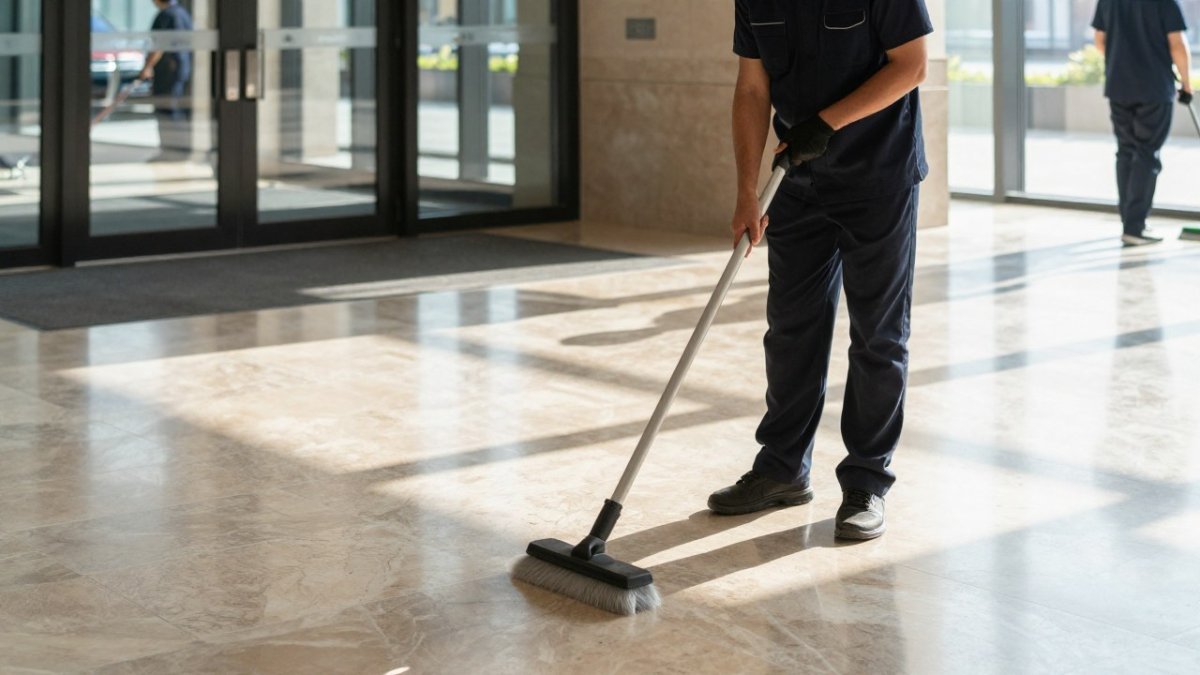
The daily routine has two jobs: get abrasive soil off the floor, and clean the surface without adding damage. Most wear on commercial stone floors comes from tracked-in grit acting like sandpaper under foot traffic. Remove it daily and you remove the main cause of dullness.
Sweeping, Dust Mopping, and Vacuuming Grit Away
Start each day with dry removal before any moisture touches the stone. A microfiber dust mop or a vacuum with a hard-floor attachment lifts sand, soil, and debris that sweeping alone can push around. Work in overlapping lanes from the back of the space toward the exits so you are not walking through cleaned areas. High-traffic zones near doors and elevator banks need a second pass.
Damp Mopping With a pH-Neutral Cleaner
Damp mopping follows dry removal, never replaces it. Use a pH-neutral cleaner mixed at the dilution on the label, a clean mop head, and enough water to lift soil without leaving standing moisture on the stone. Change the water often. Dirty mop water redeposits the very grit you just removed, and on natural stone it also leaves streaks that show under lobby lighting.
Choosing Stone-Safe Cleaners and What to Avoid
The safest default for routine cleaning of natural stone is a pH-neutral cleaner formulated for stone. Alkaline cleaners have their place for degreasing in food service and loading areas, but they should be stone-specific and used at correct dilution. Acidic products are the bigger risk.
Avoid these on any stone floor:
- Vinegar, lemon juice, and acidic bathroom or descaler products
- Abrasive powders and scouring pads that scratch polished surfaces
- General-purpose floor-care products not labeled for stone
- Overly wet mopping that drives moisture into seams and unsealed stone
Watch out: an acidic cleaner left to dwell on marble or limestone etches the polish, and that dull patch will not come back with mopping. It needs mechanical restoration.
Stone Identification and Material-Specific Procedures
Procedures change with the stone, so identify the material before writing any SOP. A single cleaner that works on granite can etch marble, and a method that refreshes slate can scratch a polished limestone. The table below summarizes the practical differences facility managers need to know.
| Stone type | Composition and acid sensitivity | Typical commercial use | Routine cleaning notes |
|---|---|---|---|
| Marble | Calcium-based; highly acid-sensitive | Lobbies, corridors, feature floors | pH-neutral cleaner only; blot spills immediately; avoid acidic restroom or descaler products |
| Limestone | Calcium-based; acid-sensitive and porous | Atriums, entries, low-traffic areas | Neutral cleaner; avoid over-wetting; sealant maintenance is critical |
| Travertine | Calcium-based; acid-sensitive; filled or unfilled | Lobbies, bathrooms, decorative floors | Neutral cleaner; gentle agitation on filled surfaces; avoid acids and abrasives |
| Granite | Igneous; harder and more acid-resistant | High-traffic lobbies, entries, food service | Neutral cleaner preferred; alkaline degreasers acceptable when stone-safe; periodic deep clean with appropriate pads |
| Slate | Metamorphic; variable acid resistance; cleft surface | Entries, walkways, rustic interiors | Neutral cleaner; gentle agitation; avoid excessive water on cleft surfaces |
| Engineered stone (quartz) | Resin-based; generally non-porous | Counters, some flooring | pH-neutral cleaner; avoid harsh solvents and abrasive pads that dull the finish |
A practical identification step: check the original spec sheet or ask the installer. If neither exists, a small test in an inconspicuous area tells you how the surface reacts to a neutral cleaner and how porous it is. Apply a few drops of water and watch absorption; fast absorption suggests an unsealed or porous stone. Then test a pH-neutral stone cleaner on a small spot and check for dulling or residue. Record the result in the maintenance file so every crew member follows the same procedure.
Watch out: never use a vinegar or acidic test on marble or limestone to check for etching, the test itself can leave a permanent dull mark. Use water and a neutral cleaner instead.
Commercial Floor Stone Sealing and Resealing Schedules
Commercial floor stone sealing is a schedule, not a one-time job. Sealant slows moisture and stain penetration, but foot traffic and cleaning wear it down. Rather than guessing, test: pour a small bead of water on an inconspicuous spot and watch how quickly it absorbs. Fast absorption means the sealer needs refreshing.
A workable baseline for most facilities:
- High-traffic lobbies: inspect quarterly, reseal as testing indicates
- Moderate-traffic corridors: inspect twice a year
- Low-traffic back-of-house areas: annual inspection
For facilities that want the sealing handled correctly, professional marble sealing in NYC covers floors, counters, and tables with a free quote.
Stone Floor Stain Removal: Spills, Wine, and Oil
Stone floor stain removal works best fast, and the method depends on what spilled. Blot liquids immediately with a clean absorbent cloth; do not wipe, which spreads the stain. For oil-based stains, a poultice draws the substance out of the stone over hours or days. For organic stains like wine or coffee, a poultice with a mild bleaching agent suited to stone can lift discoloration, but test first.
The honest answer on old stains: a wine stain that has sat for months may lighten significantly with poultice work, yet some deep etching and pigment remain. That is when mechanical restoration, not cleaning, is the fix. The EPA’s guidance on safer cleaning products is a reasonable reference for choosing low-hazard chemistry around occupied buildings.
Granite Floor Care in High-Traffic Lobbies
Granite floor care in lobbies comes down to grit control and periodic deep cleaning. Granite handles traffic well, but polished granite shows dulling where abrasive soil is ground in day after day. Daily dust mopping near entrances does more for appearance than any occasional heavy scrub.
Schedule a periodic deep clean with a floor machine and appropriate pads to refresh the surface, and keep an eye on seam lines where soil collects. If the polish has gone flat across a large area, that is a restoration conversation, not a cleaning one.
Call a marble contractor today for a free estimate! →
Entrance Mats, Grit Control, and Slip Resistance
Entrance mats are the cheapest maintenance tool a facility has. A proper matting system, typically 10 to 15 feet of walk-off coverage at each entrance, removes tracked-in grit before it reaches the stone. That reduces wear, cuts cleaning frequency, and improves slip resistance.
On slip risks: polished stone is more slippery when wet or contaminated with oil. Keep spill response fast, use wet-floor signage during mopping, and check that mats lie flat. A maintenance program that ignores slip resistance is a liability program waiting to happen.
Staff Training, SOPs, and Quality Checks
Write the procedure down. An SOP for commercial stone floor cleaning should specify the cleaner, the dilution, the mop type, the order of work, and the drying time for each stone type in the building. Train new staff against it, and re-train when products change.
A complete SOP for each stone type should include:
- Approved cleaners and exact dilution ratios (for example, 1:64 or per label instructions)
- Mop head material and replacement frequency
- Order of work: dry removal first, then damp mopping, then drying
- Dwell time limits for any cleaner left on the stone
- Drying method and time before allowing foot traffic
- Spill response steps and poultice procedures
- Equipment list and pad types for periodic deep cleaning
Training cadence matters as much as the document. Most commercial operations find that a short daily huddle to review the day’s priorities, a weekly walk-through with the crew lead, and a quarterly refresher on stone-specific procedures keep standards from drifting. New hires should shadow an experienced custodian for at least one full shift before working independently on stone floors.
Quality checks catch drift before clients do. A simple weekly walk-through with a checklist, looking for streaks, dull patches, and missed edges, keeps standards consistent. A practical inspection checklist includes:
- Streaks or haze under lobby lighting
- Dull patches near entrances and elevator banks
- Missed edges along walls and under mats
- Standing water or damp seams
- Discolored grout lines
- Visible scratches or etch marks
Record inspection results and corrective actions in a log. If the same issue appears twice in a month, revisit the SOP or the training rather than blaming the crew. If you are weighing outside help, our guide on what to look for when hiring a marble restoration company covers the questions to ask.
Lifecycle Costs and When to Call a Stone Restoration Contractor
Well-maintained stone lasts decades; neglected stone needs replacement. The cost question is really a comparison between steady routine care and periodic restoration versus premature replacement of an expensive finish.
Call a restoration contractor when:
- Polished surfaces have gone uniformly dull and cleaning will not bring back the shine
- Etching, scratches, or lippage at seams are visible
- Stains have penetrated and poultices fail to lift them
- Chips and cracks appear in slate or travertine
For projects that need it, marble and stone restoration in New York covers correction and protection for floors and countertops. Johnny Stone Work has 163 happy customers, and we are glad to walk a facility manager through what restoration can realistically achieve.
Requesting a Free Estimate for Your Stone Floors
A useful estimate starts with a walk-through. Note the stone type, square footage, traffic level, and the specific problems you see, then ask for a written scope that separates cleaning, sealing, and restoration. That structure makes quotes comparable and prevents surprise line items.
To move from planning to action, request a free estimate for your commercial stone floors. For day-to-day care between professional visits, our article on how to clean and care for stone and marble goes deeper on routine products and habits.
Frequently Asked Questions
How often should commercial stone floors be cleaned?
High-traffic areas like lobbies and corridors need daily dust mopping and spot cleaning, with damp mopping two to three times per week using a pH-neutral cleaner. Lower-traffic offices can often get by with sweeping three times weekly and damp mopping once a week. The key is removing grit before it grinds into the surface. Build frequency around foot traffic counts, not a fixed calendar, and adjust seasonally when wet weather brings in more soil.
Which cleaners are safe for natural stone floors?
pH-neutral cleaners formulated for stone are the safest choice for routine commercial stone floor cleaning. Avoid acidic products like vinegar, lemon juice, and bathroom descalers, which etch marble, limestone, and travertine. Skip abrasive powders and anything containing bleach in high concentrations. For greasy soil, use a mild alkaline stone-specific cleaner at the dilution on the label, rinse thoroughly, and dry the surface so no residue dulls the finish.
How do you remove red wine stains from marble?
Blot the spill immediately without wiping, then apply a poultice made from baking soda and distilled water over the stain. Cover it with plastic wrap, tape the edges, and leave it 24 to 48 hours so the powder draws the stain out. Remove the poultice and rinse with distilled water. Old, set-in stains may need a second application or professional stone floor stain removal, since marble is porous and deep penetration is common.
Can vinegar or other acidic cleaners damage stone floors?
Yes. Acids react with the calcium carbonate in marble, limestone, and travertine, dulling the polish and leaving etch marks that look like water spots. A single vinegar wipe may leave a faint mark; repeated use wears the surface unevenly. Granite is more acid-resistant but still not immune. Stick to pH-neutral or stone-specific chemicals, and never use vinegar, Windex, or rubbing alcohol as routine cleaners on polished stone.
How long does commercial floor stone sealing last?
Most penetrating sealers on commercial floors last one to three years depending on stone type, traffic, and cleaning products used. A simple water test tells you when it is time: drop water on the surface and watch whether it beads or absorbs within a few minutes. High-traffic lobbies often need resealing closer to the one-year mark. Polished marble in low-traffic areas can go longer, but check annually and log the results.
When should a commercial stone floor be professionally polished or restored?
Call a restoration contractor when daily cleaning no longer brings back the shine, when etch marks and scratches are visible across the surface, or when sealant stops absorbing evenly. Deep-set stains, lippage between tiles, and cracked or chipped slate also warrant professional attention. Johnny Stone Work provides free estimates, so you can confirm the scope before committing to a full replacement.
Maintaining commercial stone floors is a discipline of small, repeated actions: dry removal daily, neutral cleaning, grit control at every entrance, and sealing on a tested schedule. When the surface moves beyond cleaning, Johnny Stone Work restores marble, granite, and slate for commercial and residential clients, backed by free estimates and a track record of 163 happy customers. Get started with Johnny Stone Work and protect the finish your building is judged by.