Last Updated: November 18, 2026
Quick Summary
To remove oil stains from natural stone, first test whether the surface is sealed, then apply a poultice of absorbent powder mixed with a suitable solvent. Cover it with plastic wrap and leave it for 24 to 48 hours. Gently scrape away the dried paste and rinse, repeating if needed. Avoid harsh scrubbing, which can scratch the polish.
- Sprinkle water on the stone; if it soaks in and darkens, the surface is unsealed and more absorbent.
- Spread the poultice about one-quarter to one-half inch thick, extending past the stain’s edges.
- Leave the covered poultice for 24 to 48 hours, since many stains need several rounds.
- Do not scrub with metal tools or abrasive pads, as this can scratch the polish.
- Avoid vinegar and other acidic cleaners on marble, because they can etch the surface.
Table of Contents
- Identify the Stone and Stain Before You Start
- Gather the Materials and Tools for Stone Oil Stain Removal
- How to Remove Dried Oil Stains from Stone with a Poultice
- Cleaning Oil Stains from Marble and Patio Stone
- Frequently Asked Questions
Oil stains on natural stone are frustrating, but often fixable with the right method. At Johnny Stone Work, we restore marble, slate, and granite across the New York City area. This guide covers identifying the stone and stain, gathering materials, and removing oil with a poultice. For older, set-in stains, see how to remove old stains from stone countertops at home.
Identify the Stone and Stain Before You Start
Natural stone is porous, so oil can soak in and leave a darker mark. Marble and limestone are especially vulnerable; granite is generally more resistant. Before applying anything, check what you are working with. Our practical tips on everyday care and stain prevention for marble and natural stone cover how to care for your specific type of stone.
Start with a simple test to learn how your surface behaves:
- Sprinkle a few drops of water on the stone and watch for 10 minutes.
- If the water beads up, the surface is likely sealed.
- If it soaks in and darkens the stone, it is probably unsealed and more absorbent.
Next, examine the stain. Fresh oil often looks shiny and spreads outward; older stains look dull, dark, and set in. Test any cleaner or poultice in a small, hidden spot first to make sure it does not dull the finish.
Gather the Materials and Tools for Stone Oil Stain Removal
Having everything ready keeps the process simple. You will generally need:
- Mild dish soap and warm water
- A soft cloth and a plastic scraper or spatula
- An absorbent powder such as baking soda, or a commercial poultice powder
- A solvent suited to your stone, such as acetone for many oil-based stains
- Plastic wrap and painter’s tape to cover the poultice
- Protective gloves and eye protection
- A clean, damp cloth for rinsing
Work in a room with good airflow, especially when using solvents, and keep pets and children away until you finish.
How to Remove Dried Oil Stains from Stone with a Poultice
A poultice draws the oil out of the stone into an absorbent material. It is the most effective method for dried, set-in stains.
Step 1: Clean the surface. Wipe the stone with soap and warm water, then dry it fully so the poultice can work on the oil itself.
Step 2: Mix the poultice. Combine your absorbent powder with the solvent until you get a thick paste, similar to peanut butter. Avoid making it runny.
Step 3: Apply the poultice. Spread a layer about one-quarter to one-half inch thick over the stain, extending a little past its edges. Gloved hands work well for this.
Step 4: Cover and wait. Lay plastic wrap over the paste and tape the edges down so it stays moist. Leave it for 24 to 48 hours. Many stains need several rounds, so do not expect one application to finish the job.
Step 5: Remove and rinse. Once the paste is fully dry, scrape it away gently and rinse with clean water. Check whether the stain has lightened before deciding on a second application.
Watch out: Do not scrub hard with a metal tool or abrasive pad. This can scratch the polish and make future stains easier to spread.
The poultice process comes down to five steps, each with a timing or frequency you can follow.
| Step | What to do | Time or frequency |
|---|---|---|
| 1. Clean the surface | Wipe with soap and warm water, then dry fully | Before poultice |
| 2. Mix the poultice | Combine absorbent powder with solvent into thick paste | Until peanut-butter thick |
| 3. Apply the poultice | Spread over stain, extending past its edges | One-quarter to one-half inch thick |
| 4. Cover and wait | Cover with plastic wrap and tape edges down | 24 to 48 hours |
| 5. Remove and rinse | Scrape away once dry, rinse with clean water | Repeat if stain persists |
Cleaning Oil Stains from Marble and Patio Stone
Marble and outdoor patio stone each need a slightly different touch. Marble is softer and reacts to acidic cleaners, so stick with pH-neutral products. Learn why vinegar etches marble countertops before reaching for household cleaners. Patio stone is exposed to weather, which can drive oil deeper and make it harder to lift.
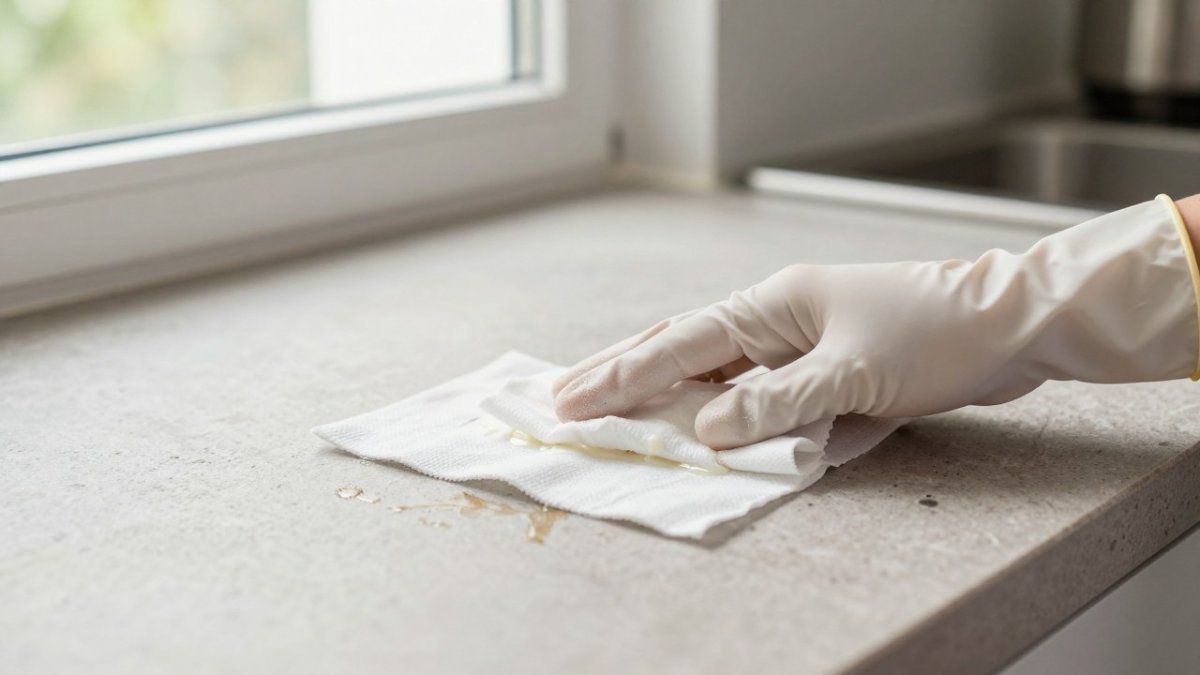
For fresh oil on either surface, blot the spill immediately with paper towels instead of rubbing. Then clean with a few drops of mild dish soap in warm water. For older stains on patio stone, a poultice usually works better than soap alone.
After cleaning, consider sealing the stone to slow future staining. Our step-by-step guide to sealing and protecting marble countertops explains which sealer to choose. Sealed surfaces resist oil much better. How often to reseal depends on the stone, traffic, and product used; if unsure, ask a professional to test the surface.
Frequently Asked Questions
How can I remove an oil stain from natural stone?
Start by identifying your stone and whether it is sealed. For fresh stains, blot the spill and wash the area with a few drops of mild dish soap and warm water, then rinse and dry. For older or dried oil stains, apply a poultice made from an absorbent powder such as baking soda or a commercial stone poultice, mixed with a stone-safe solvent to a peanut-butter consistency. Spread it about a quarter inch thick over the stain, cover it with plastic wrap taped at the edges, and let it dwell for 24 to 48 hours. Once dry, scrape it off and repeat if the stain remains. Always test the method in an inconspicuous spot first.
Can dried oil stains be removed from natural stone?
In many cases, yes. Dried oil stains are harder to remove than fresh ones because the oil has had time to penetrate the stone, but a poultice can draw much of it back out over several applications. Success depends on the stone type, how deep the stain has soaked in, and whether the surface is sealed. Light or surface-level stains often lift after one or two treatments. Deep or long-standing stains on porous stone like limestone or unsealed marble may only fade partially. Avoid harsh acids or strong solvents, which can etch marble and damage the finish. If the stain does not respond after several careful attempts, a professional stone restoration service can assess the damage and recommend a stronger approach.
Can oil stains damage or discolor natural stone?
Yes. Oil is absorbed into porous stone, which can leave a dark, permanent-looking shadow if it is not treated promptly. Left untreated, oil can also break down a stone’s sealer, making the surface more absorbent and more likely to stain again. Harsh cleaners, including vinegar, lemon juice and bleach, can etch marble and granite, dulling the polish and causing lasting damage that is harder to fix than the original stain. Blot spills right away, use pH-neutral cleaners made for stone, and reseal the surface periodically to reduce the risk of permanent discoloration.